
Rene Lazovy: Practice in Dialogue with Contemporary Ecological Theory
Text: Anita Brill
The theoretical traces of environmental processes represent a key area of inquiry in current artistic discourse and research of London based artist Rene Lazovy. Within this critical context, his practice positions itself within of theoretical research, ecological thought, and spatial intervention, destabilizing the conventional boundaries between painting, object, and its meaning.
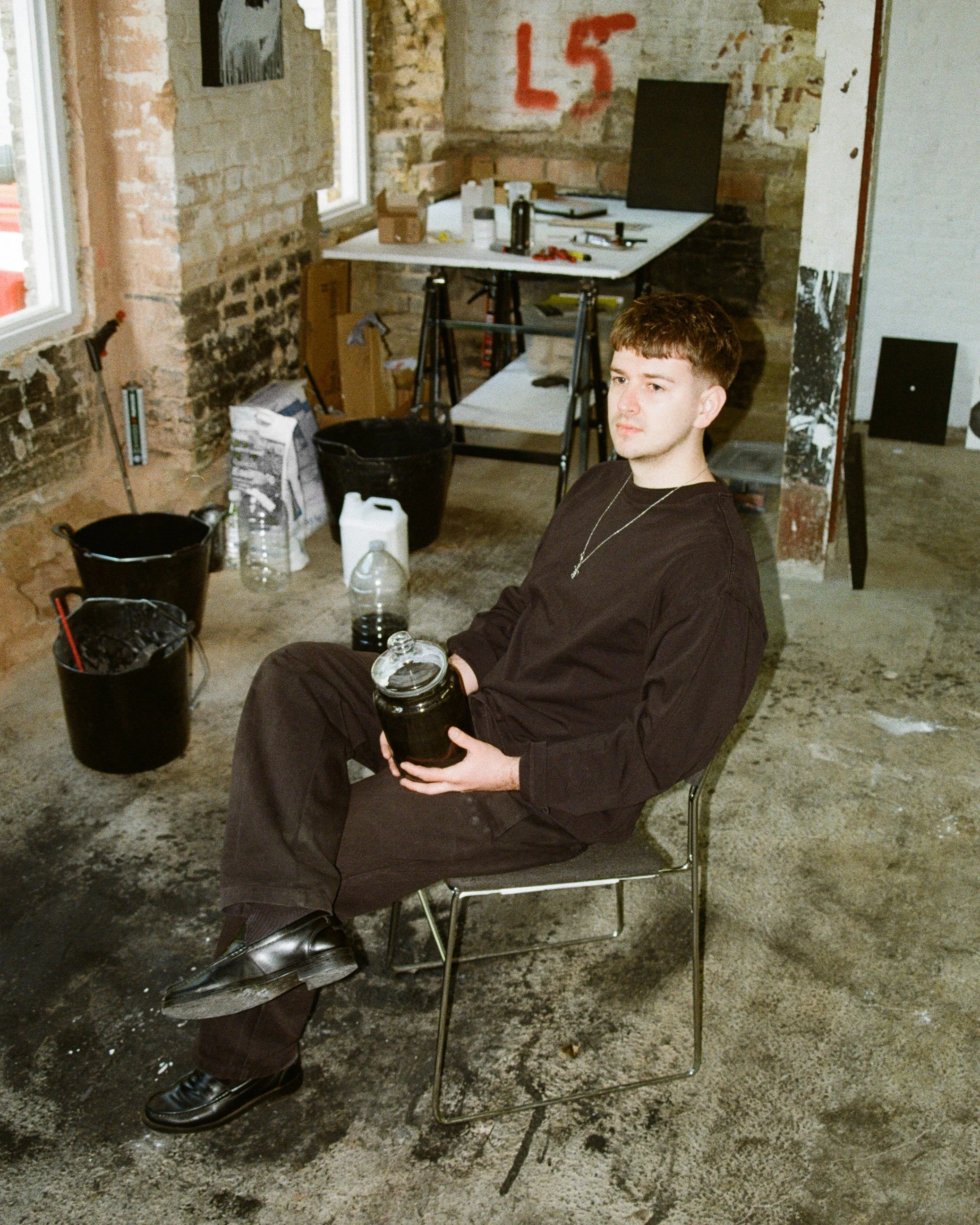
Portrait of Rene Lazovy in his studio
Image courtesy of Anita Brill and the artist
Moving beyond the two-dimensional plane of abstraction, Lazovy’s conceptual thinking is unfolding materiality through working with mixed media on the same surface, layering, covering, and immersing the viewer in the dark, abstract aesthetics, suggesting the characteristics of an object within a painting. His visual language is radically purged of consumerist noise and commercial smog, distancing itself from pure illustration. Embracing minimalism and a dark monochromatic palette to establish a deliberate ecological position, the viewer is confronted with systematic repetition and physical gesturality, along with sprayed dark mist dripping down from the paintings. He refuses to treat particular artworks as the only record of aesthetics, positioning his outputs as active structural components within an expanding research framework.
This methodology was established in the early exhibition framework Horror Vacui and the Necessity of Imagination (2024). Here, Lazovy initially examined the morphology of a falling raindrop, depicting its accurate geometry under aerodynamic pressure in contrast to the culturally standardized shape of a raindrop, often resembling an emoji-shaped teardrop. Transforming this research into a large-scale kinetic sculpture suspended in the air, individual 3D-printed raindrop shapes form a 4-metre structure, framing these small transparent objects as rain, as well as tears of the planet.
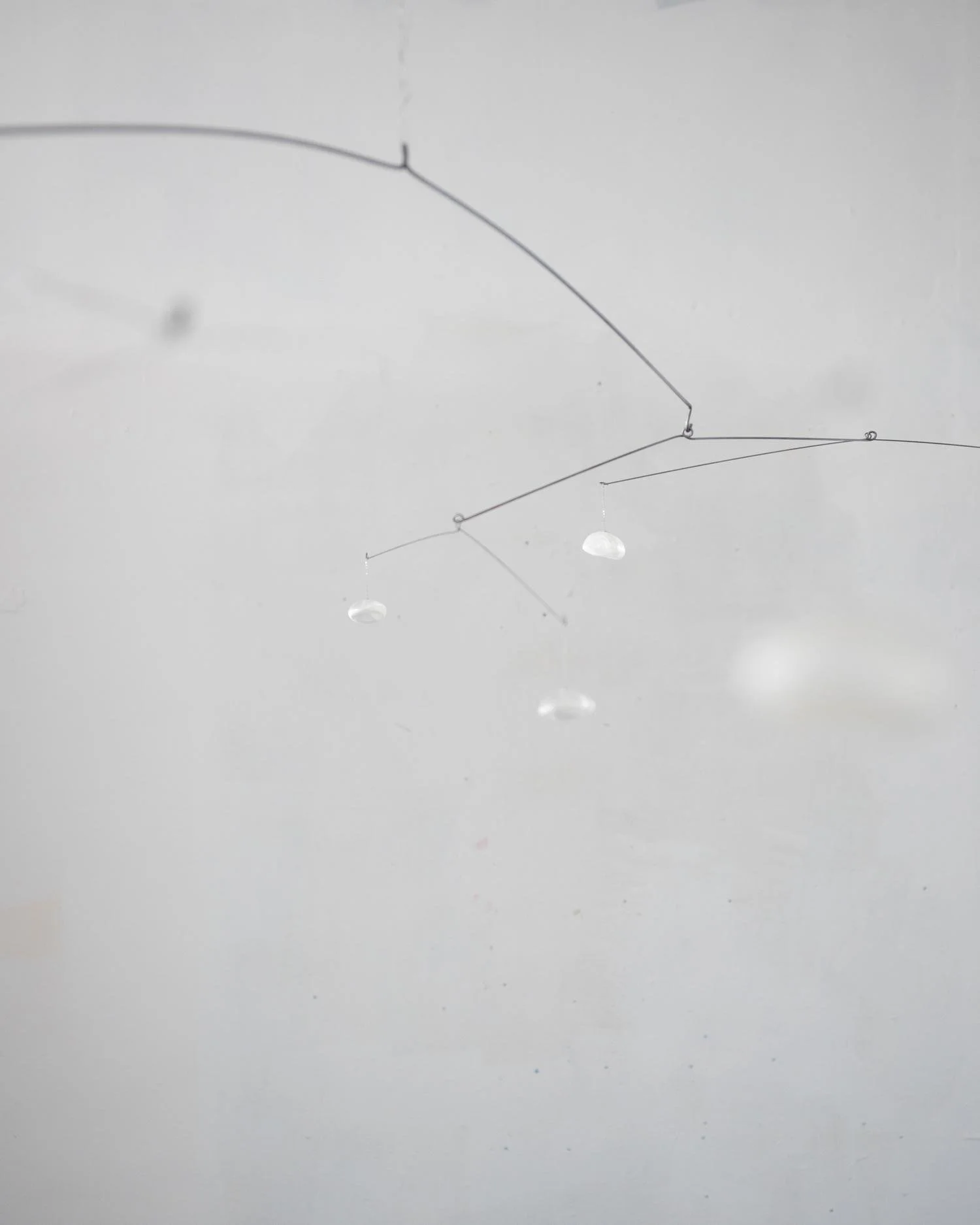
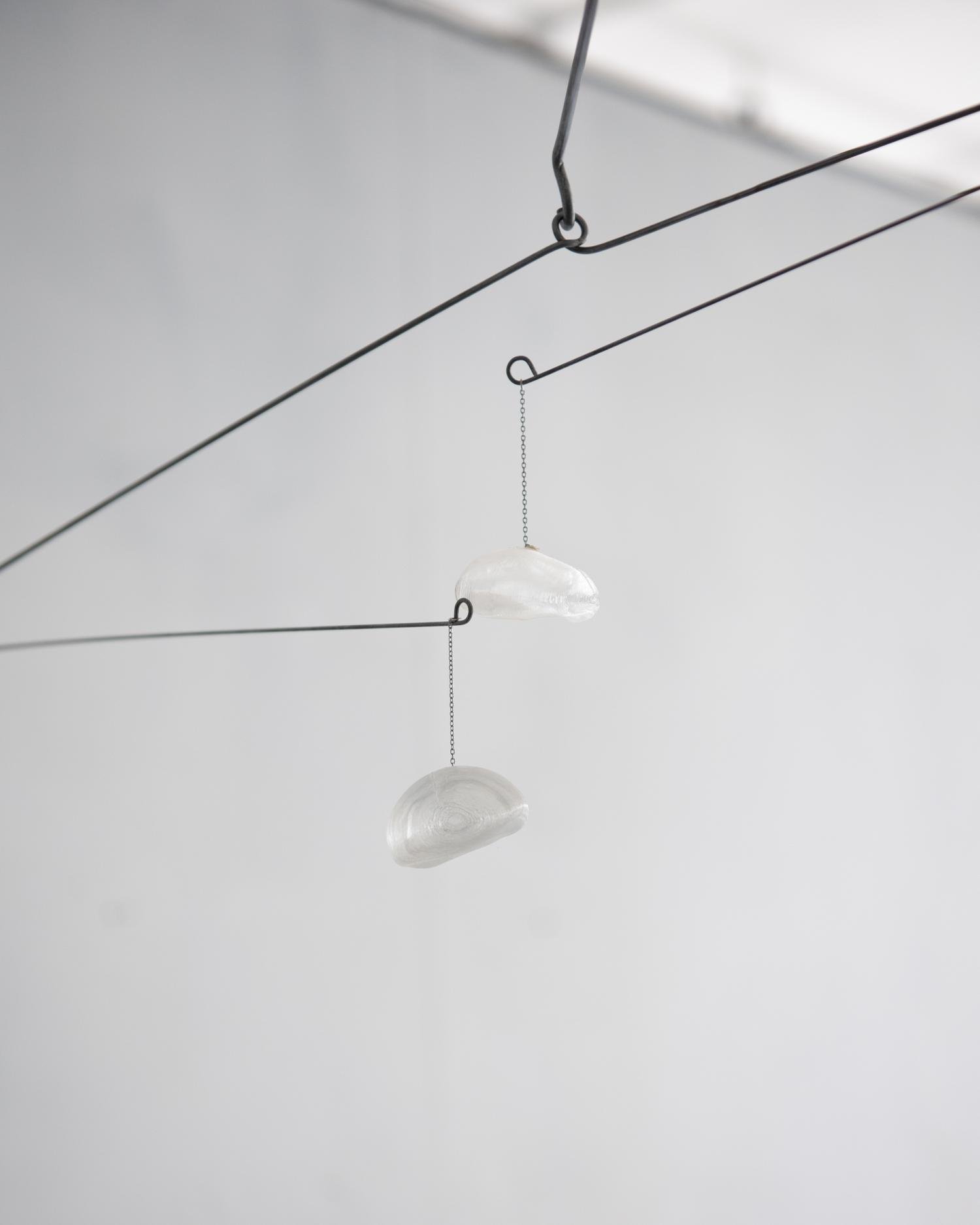
Rene Lazovy, Tears (Horror Vacui and the Necessity of Imagination)
2024, sculpture, 50 × 400 cm
Another position in the exhibition framework was presented by a painting consisting of four panels forming an almost three-metre large-format black square, toppling over the viewers and immersing them into a square portal of layered black ink drippings. The painting Horror Vacui and the Necessity of Imagination was a direct reflection on the abstract depiction of philosophical phenomena drawn from Timothy Morton’s Hyperobjects, which are entities so vastly dispersed through time and space that they are becoming incomprehensible to the human mind, whether individual or collective. Lazovy achieved this connection through more than just scale, but also through the repetitive layering of black ink onto the same surface, at the same time creating visual depth in the painting, but also acknowledging the square’s material transformation through becoming the dark, strangest, and most overwhelming object within the viewer’s field of vision.
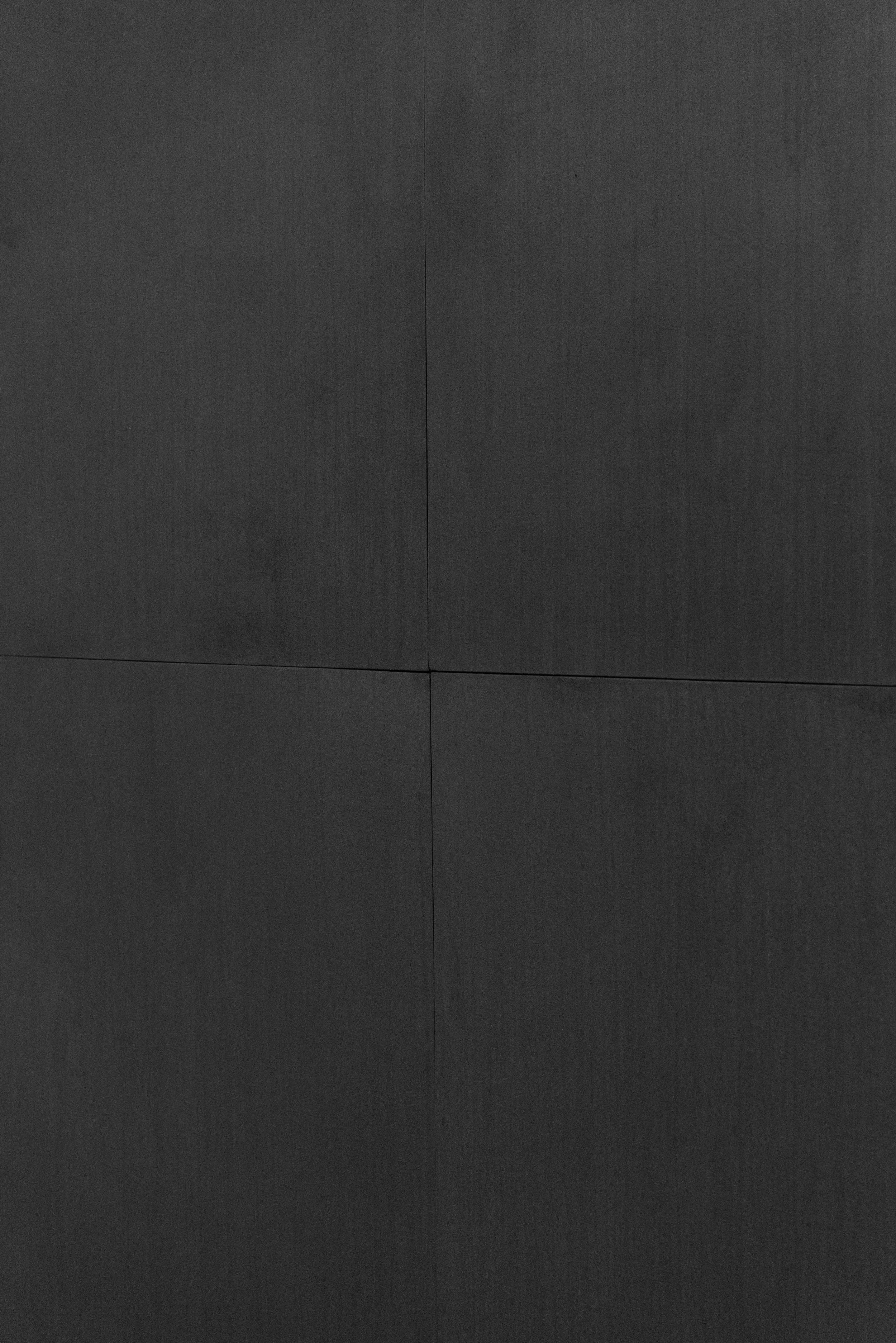
Rene Lazovy, Horror Vacui and the Necessity of Imagination
2024, ink on canvas, 260 x 260 cm
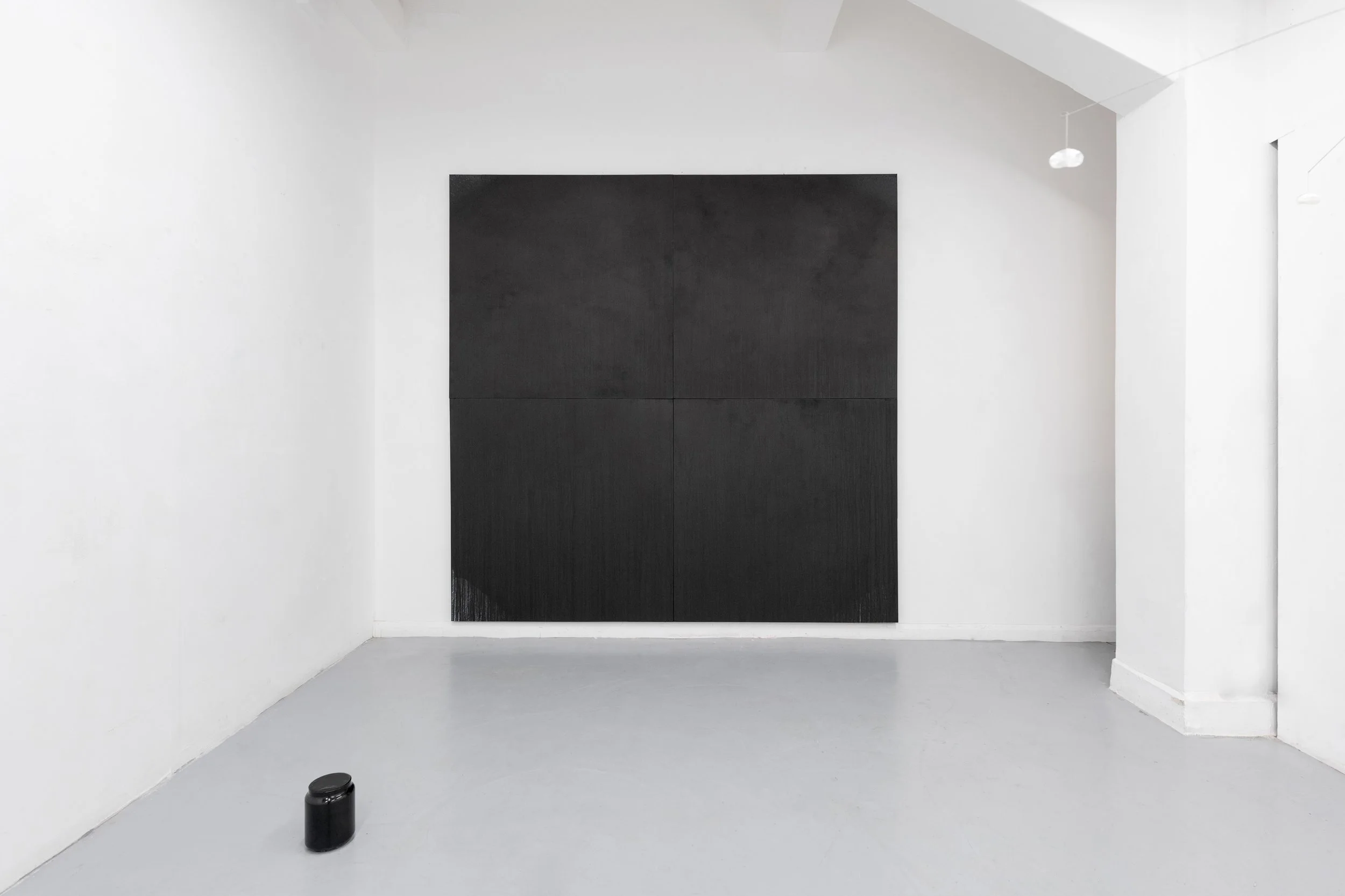
Horror Vacui and the Necessity of Imagination
London 2024
"We are far, far too close to the phenomenon called global warming... A hyperobject could be, for example, a black hole. A hyperobject could be the Solar System.
A hyperobject could be the sum total of all the nuclear materials on Earth."
Timothy Morton, Hyperobjects: Philosophy and Ecology after the End of the World, 2013
While Morton’s formulation of hyperobjects informs Lazovy’s engagement with expansive ecological scales, his practice resists their passive visual illustration. Instead, his initial explorations of the theory lead him towards a focused aesthetic examination, informally designated as Studio Studies. Lazovy explores paintings as autonomous surfaces that contain abstract entities, whose perception, imagination, and material presence activate new modes of understanding hyperobjects and environments that are traditionally too distorted to be formally depicted. Phenomena exceeding human perception, geological time, and planetary networks emerge solely through fragments, material traces, or philosophical theory.
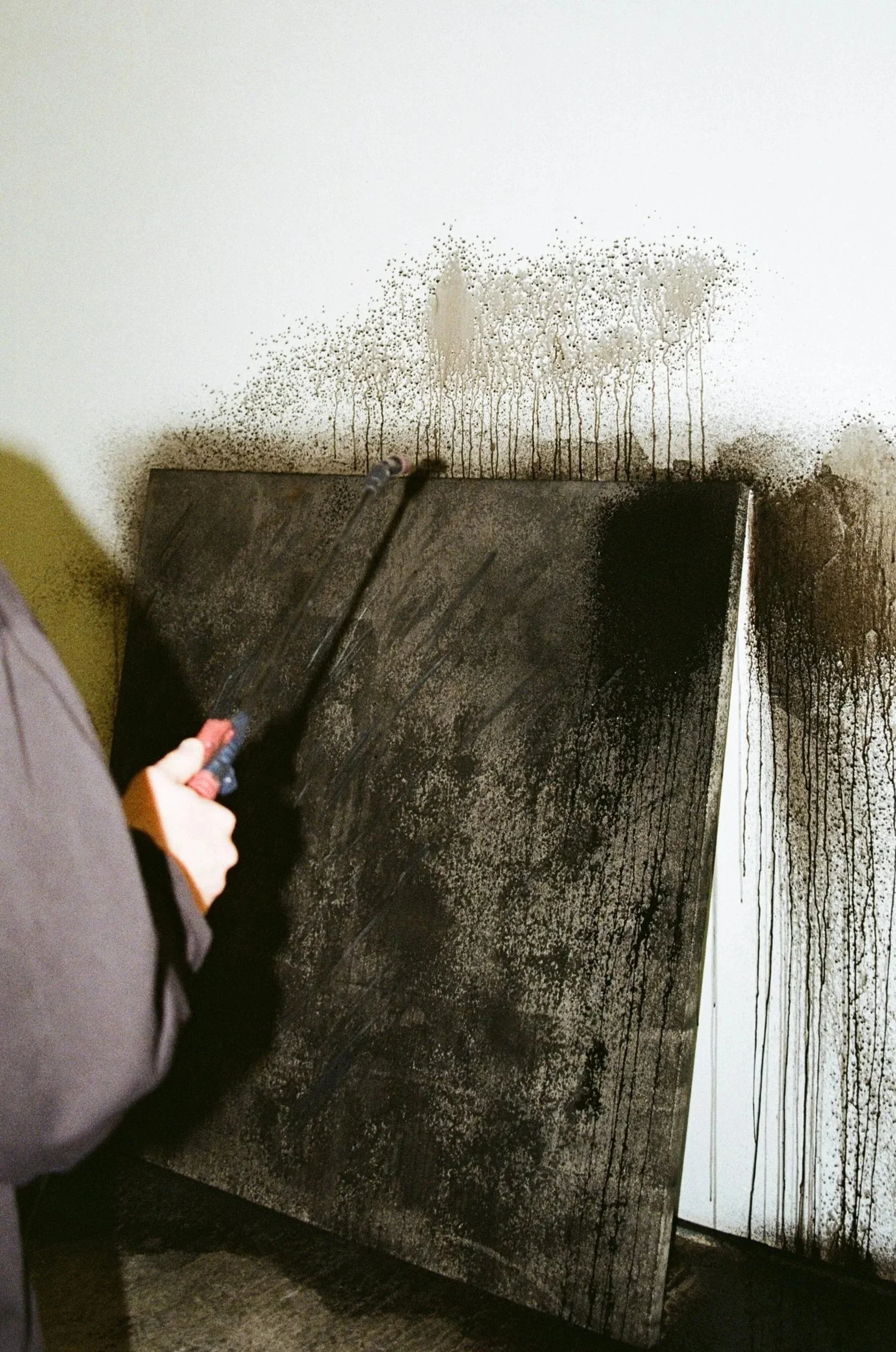
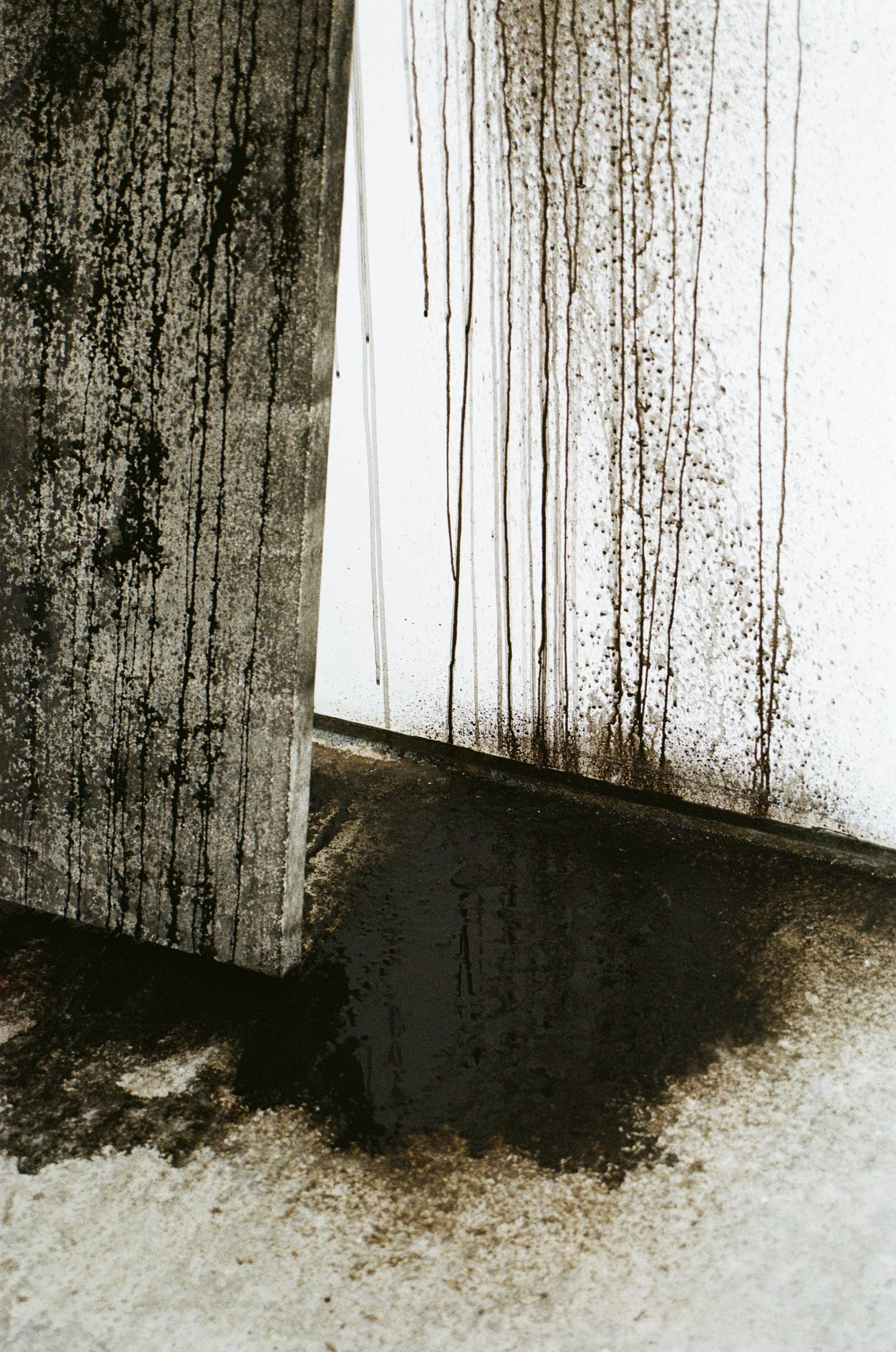
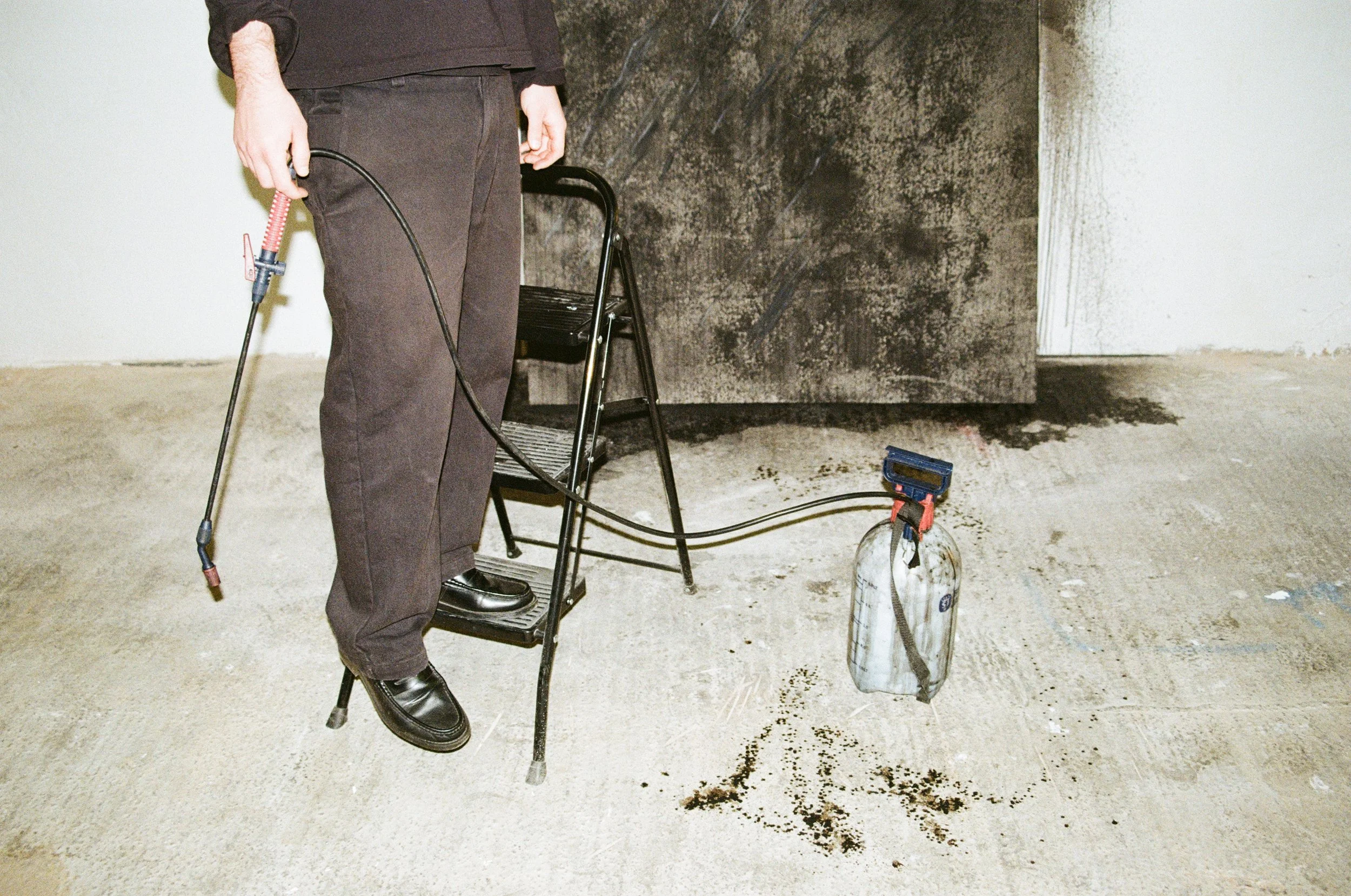
Rene Lazovy in his London studio in May 2026
Image courtesy of Anita Brill and the artist
The relational dynamic of Lazovy’s practice recalls Derrida’s (Of Grammatology, 1976) concept of the trace (la trace), through which the identity of an object is understood not as fully present or self-contained, but as constituted through traces of what is absent. In the dialogue between the works sidewind and hyperwind, the artworks exist in a state of mutual dependency. sidewind does not serve as a preliminary sketch, nor does hyperwind act as an isolated endpoint. Rather, sidewind persists as a localized fragment whose presence helps define the broader composition of hyperwind. Within this format, different layers maintain the tension between the localized fragment and the overall composition, keeping an active dialogue with the conceptual layer of the practice. Navigating materiality, spatial context, and philosophical thought, Lazovy operates as a researcher and artist at the intersection of ecological theory and the physicality of gestural creation. This close engagement demonstrates Lazovy’s technical and conceptual precision, revealing a capacity to articulate complex ecological ideas across diverse media.

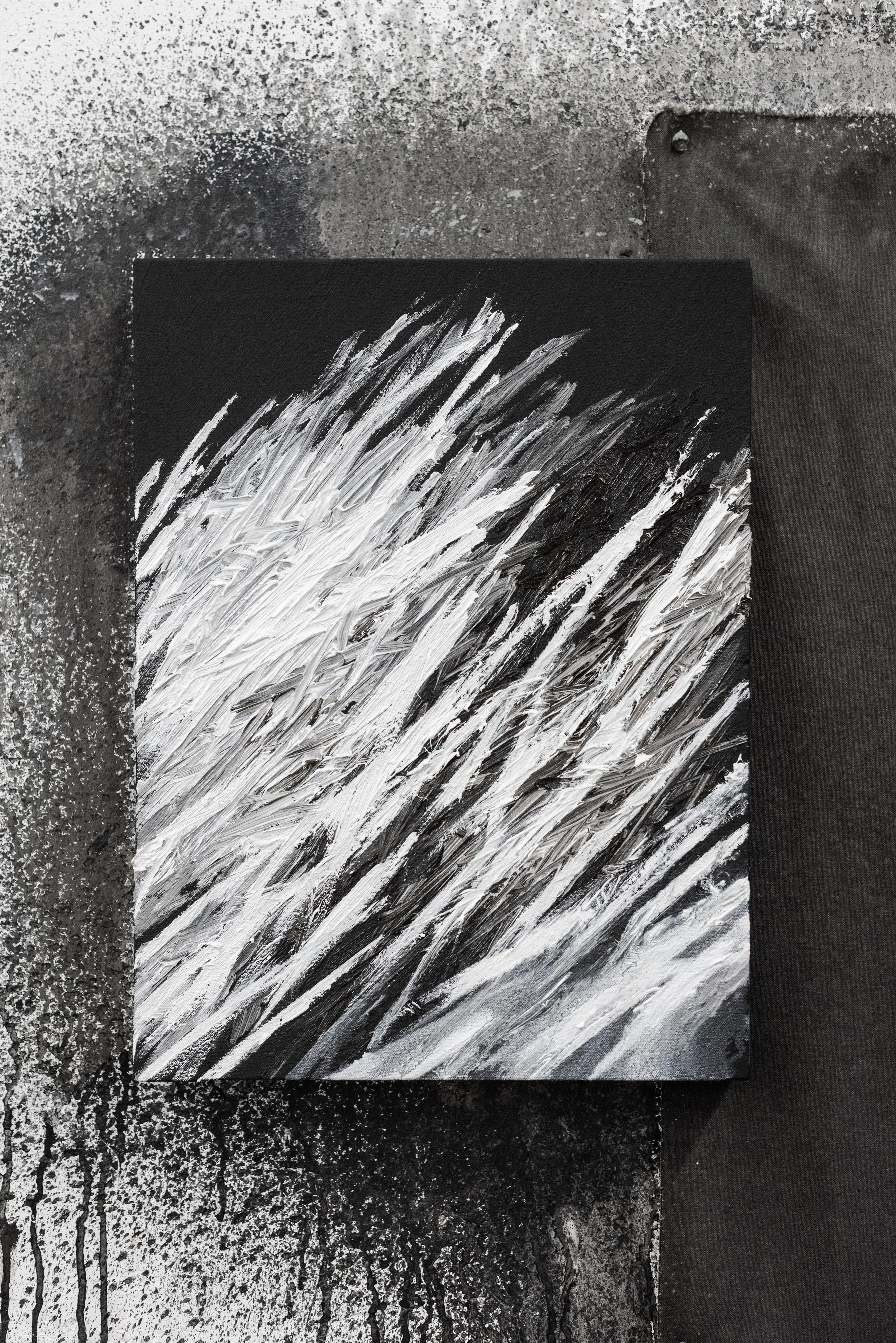
From left:
Rene Lazovy, hyperwind, 2026, mixed media on canvas, 130 × 130 cm
Rene Lazovy, sidewind, 2026, oil on canvas, 22 × 33 cm
Examining dark ecology, this multi-layered oil-on-canvas work appears subject to the gravitational pull of its chosen black oil paint medium. The residual vertical traces left on the canvas act as a physical record of time through the slow dripping, possibly suggesting a sense of societal downfall. Oscillating between micro-texture and macro-scale, the work resists a single viewing point, compelling the viewer to engage in prolonged observation of its multitonal surface and reflect on environmental instability. This dynamic relies on a tension between application and removal, as the systematic accumulation and distortion of the painted surface expose the layers underneath. In alignment with Morton’s concept of hyperobjects, blackness within Lazovy’s palette functions not as an absence or negation, but as a dense, active condition that physically surrounds the viewer through its depth.
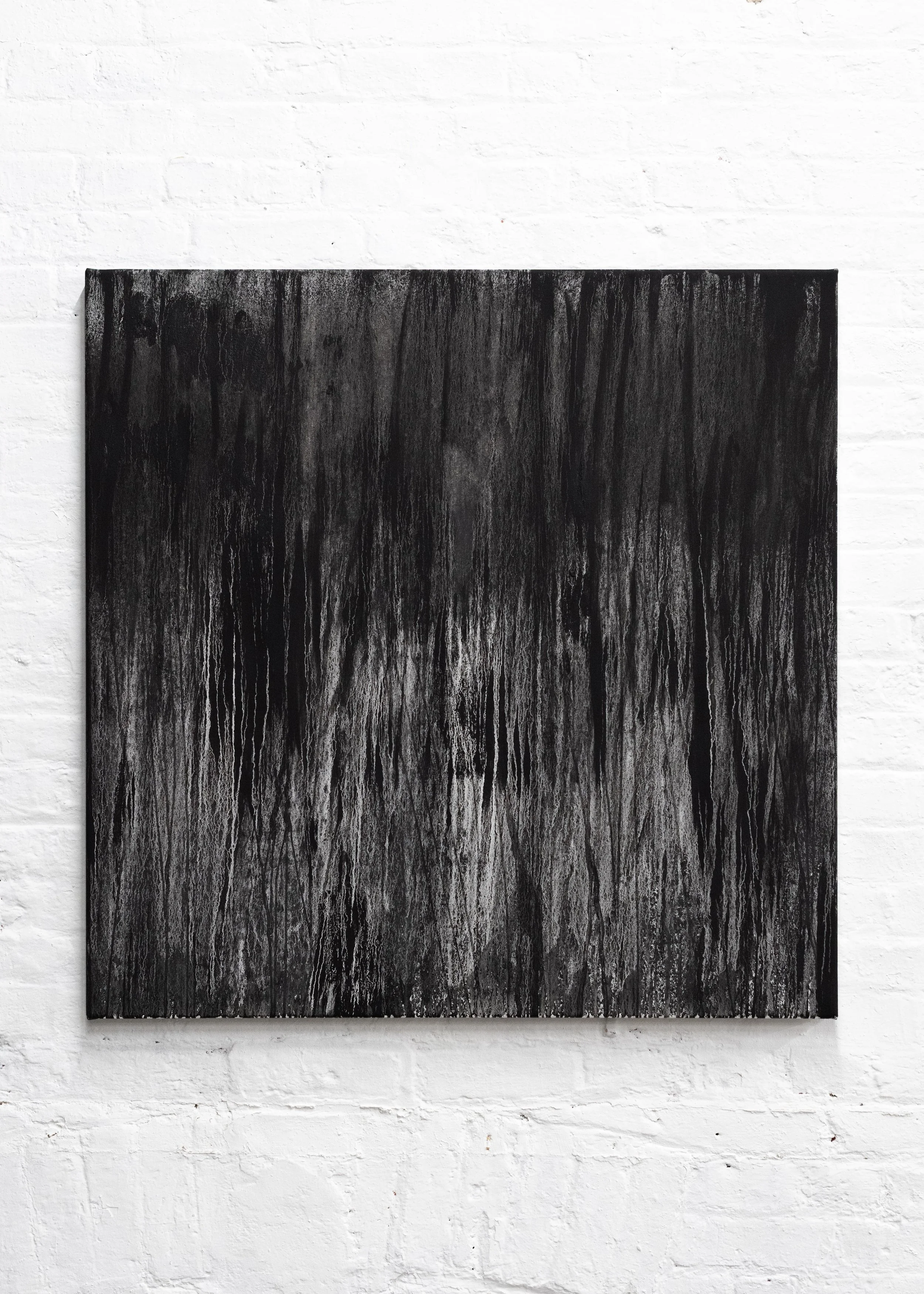
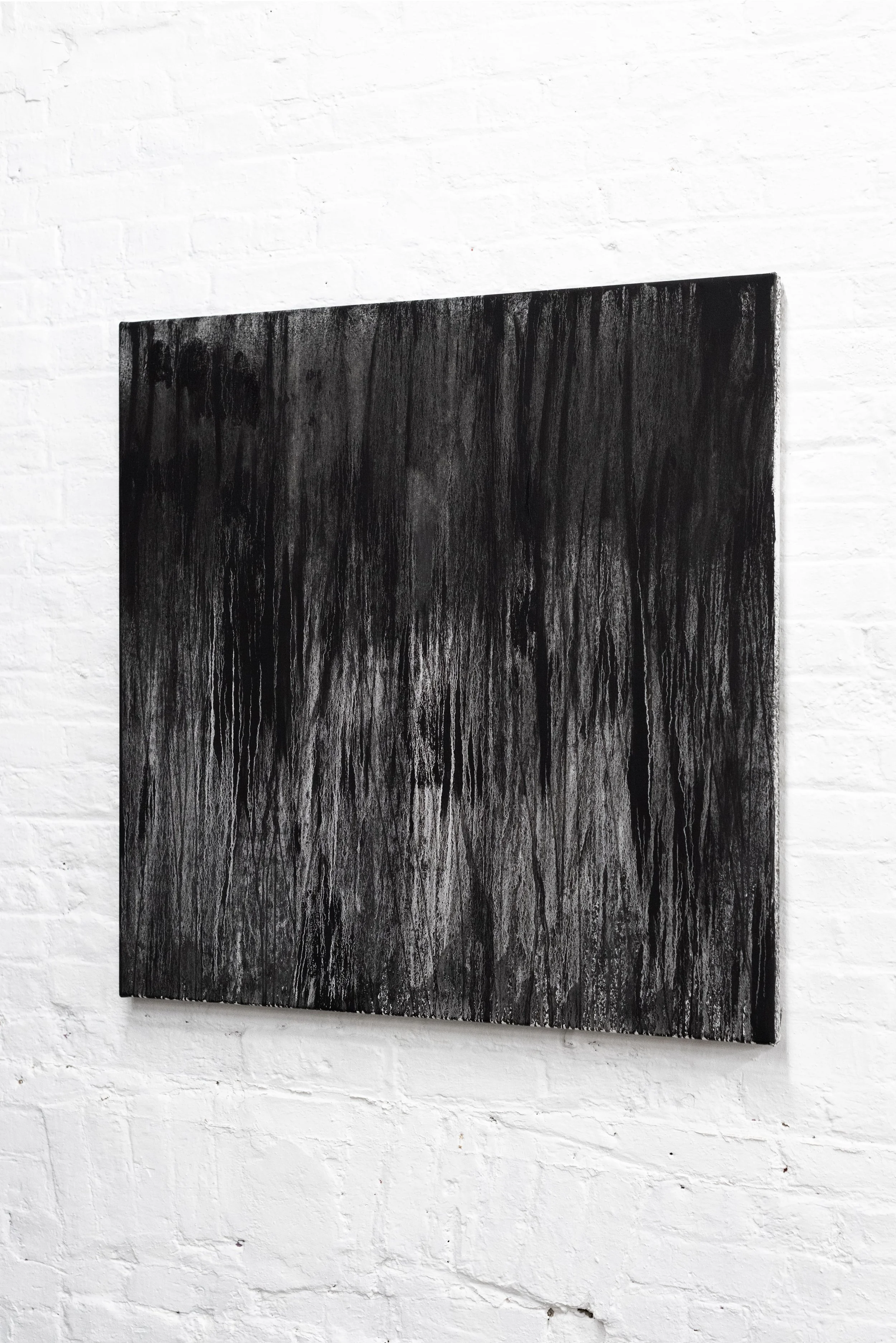
Rene Lazovy, dark ecology
2026, oil on canvas, 110 × 110 cm
Instead of depicting ecological collapse from a safe distance or projecting a positive vision for an environmental utopia, Lazovy’s practice finds itself entangled within a dark and uncertain ecological future. Immersed in a system too expansive to be observed from anywhere but from within it, a system that we all find ourselves in whether we like it or not, Lazovy’s audience is therefore denied objective oversight. It is forced to navigate the practice and its concepts subjectively, as it is also undeniably absorbed in the same ecological realities as the artist. Extending these recent visual works into a full spatial installation establishes a direct relationship between object, viewer, and context. Within this structure, the paintings remain intrinsically bound to their theoretical and scientific frameworks, turning the practice into a thought experiment that brings together conceptual ideas and physical reality. Lazovy’s reflections on society interact directly with London’s urban environment, creating a precise material engagement with today’s ecological, technological, and spatial tensions.
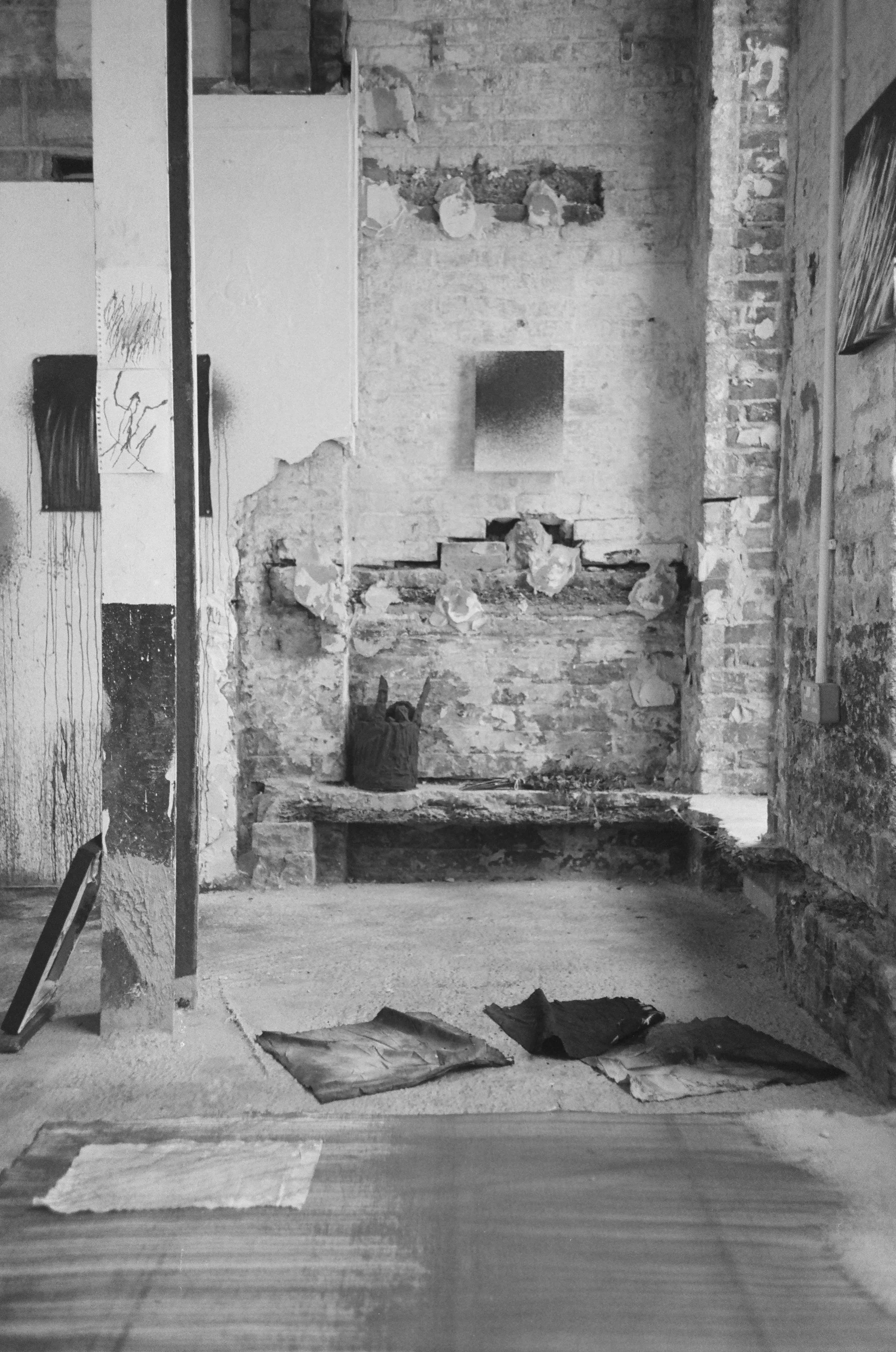
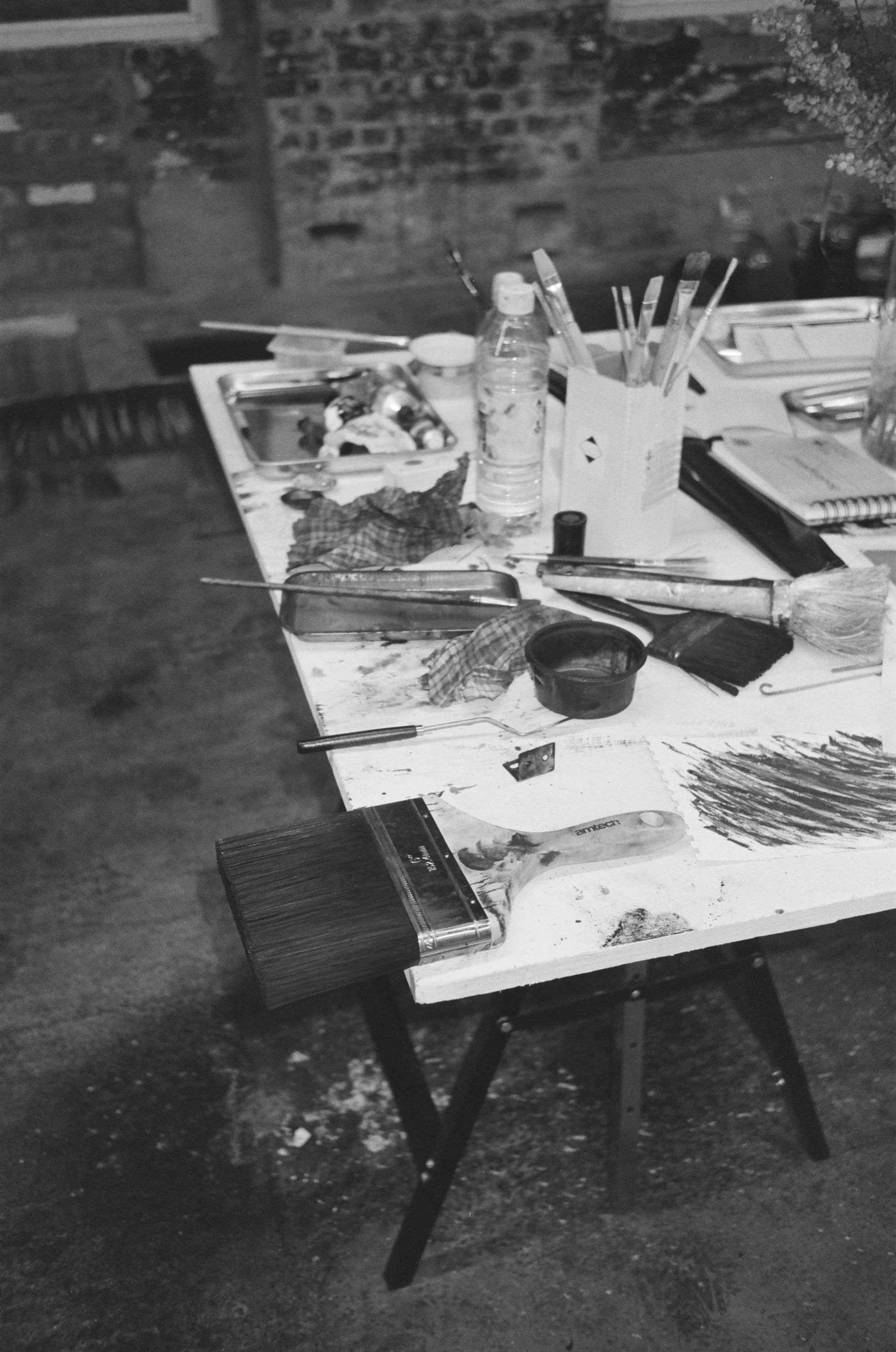
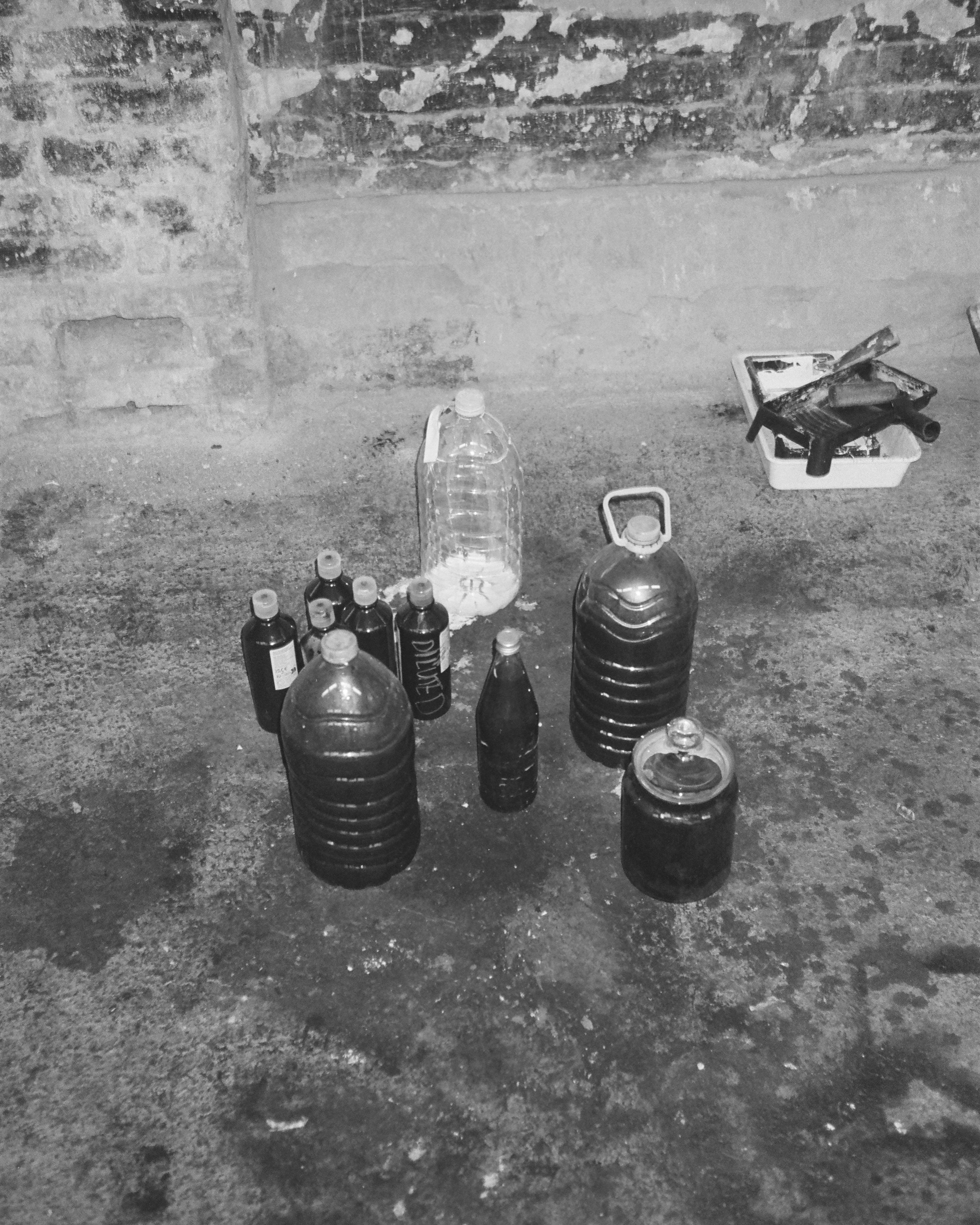
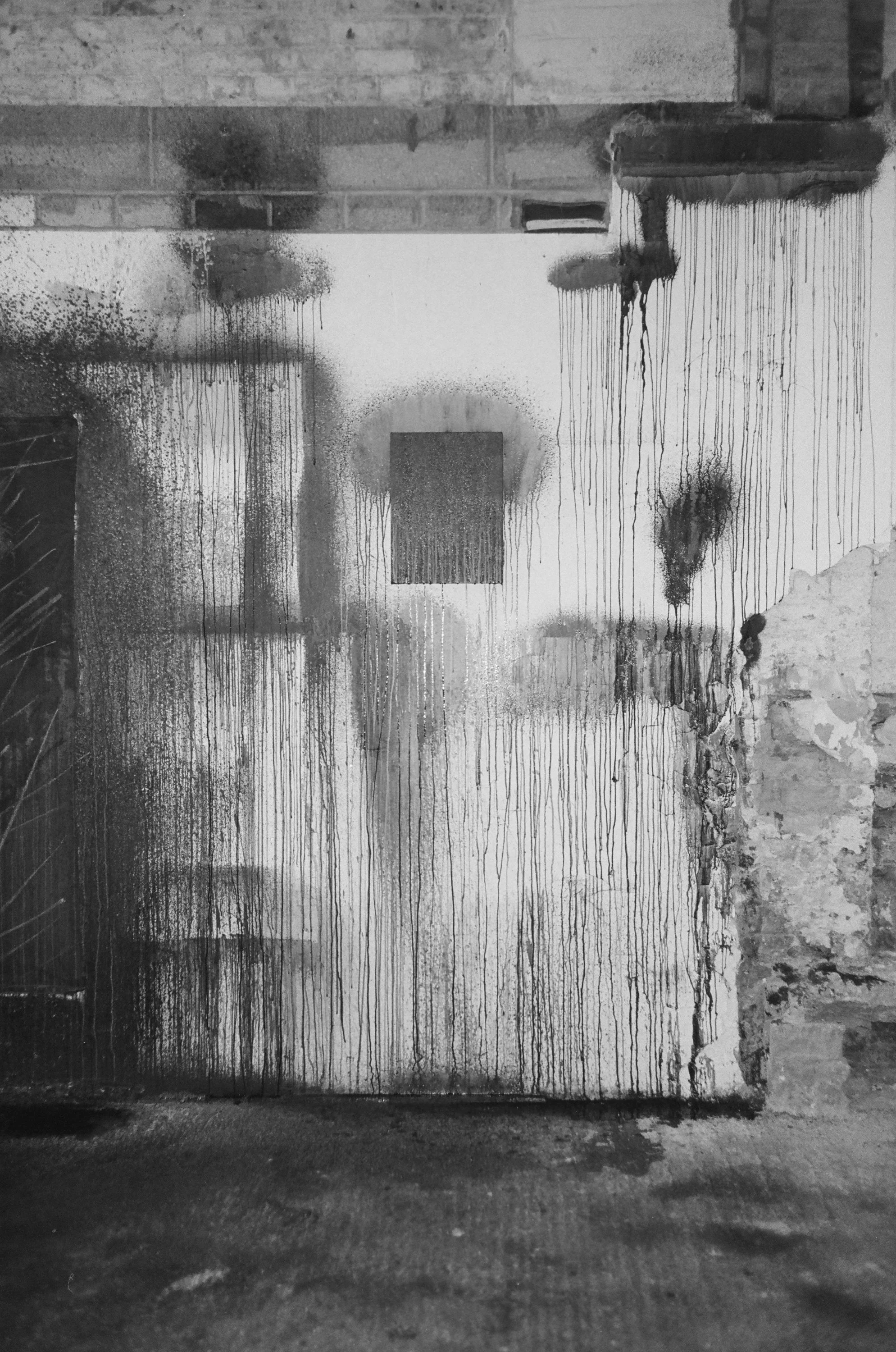
Lazovy currently works from the historic Britannia Row Studios in London—a site originally built by Pink Floyd in 1975 and historically used by artists including Joy Division, New Order, Björk, and Pulp. This environment of experimental production continues to shape his daily multidisciplinary research.
Photo documentation of the artist’s studio
Courtesy of Rene Lazovy
Rene Lazovy (1998, Bratislava, Slovakia) is a London based multidisciplinary visual artist. He completed his MA in Fine Art at Central Saint Martins in London and a BA in Photography and New Media at the Academy of Fine Arts and Design in Bratislava. His practice centers on environmental systems, climate change, technological networks, and the dynamics of individual and collective identity. Lazovy examines the material registration of large scale ecological and spatial tensions through painting, sculptural forms, photography, drawing, and physical interventions.
Lazovy’s work has been featured on international platforms and in major institutions. His recent solo presentations include exhibitions at Noiascape and Five Years Archway in London, as well as T3 Cultural Centre in Bratislava, Slovakia. He currently holds a studio residency at The Florence Trust in London, working in the former recording studio of the musical titans Pink Floyd at Britannia Row. Beyond his studio practice, he is soon attending a highly regarded artist residency at Cove Park in Scotland. Before the end of the current year, he will be included in multiple upcoming group shows, as well as being a finalist for the Kitto x Koppel Art Prize 2026.
© New Translation 2026