
From Individual Expression to Collective Form: Artistic Methodologies of Relation
Text by Márk Rékai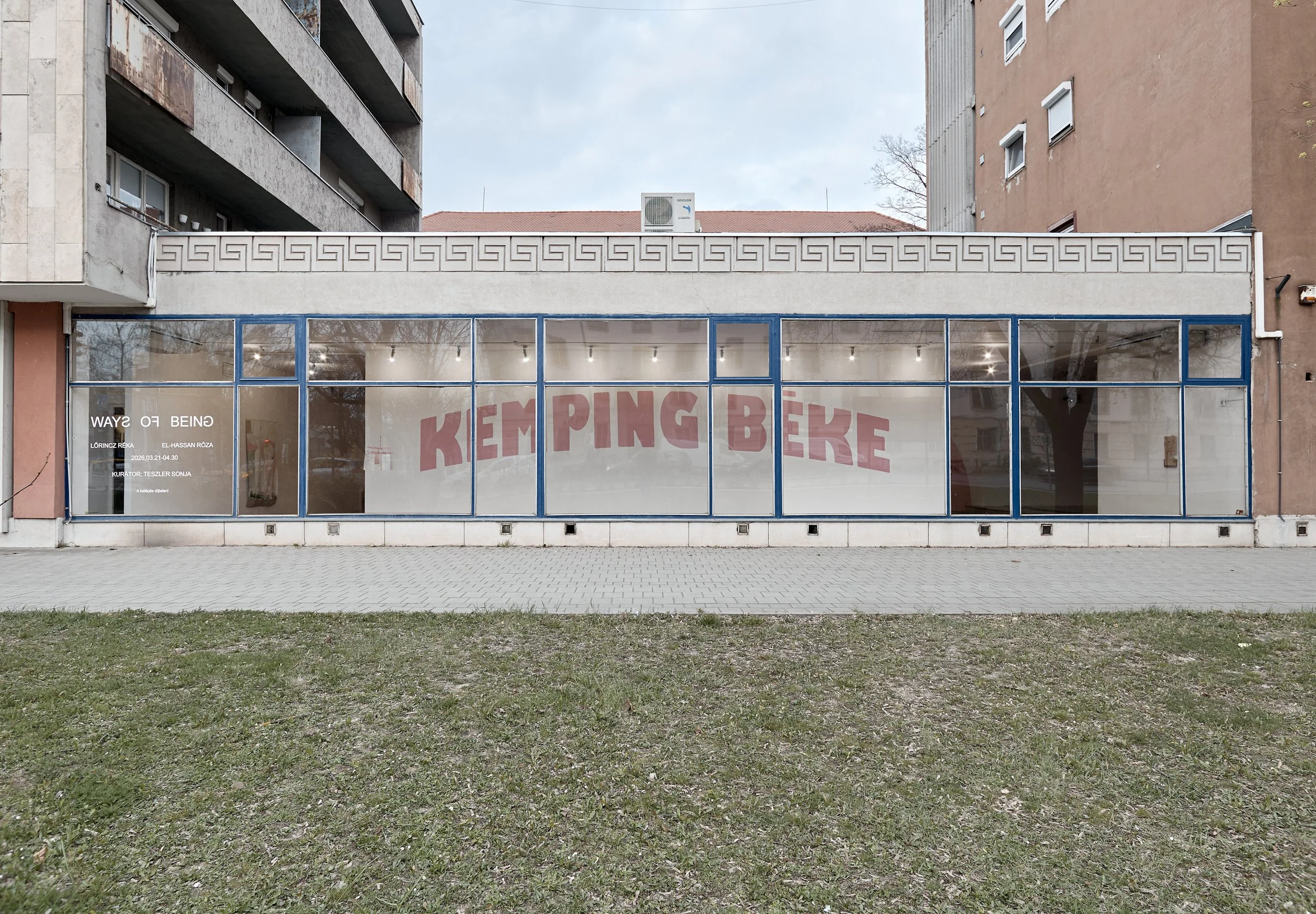
„I am coherent, mysterious, and solid.
I sit on dirt in sunlight between the live oaks.
Once I was a sun, again I will be dark.
Now I am between those great things for a while
along with other people, here in the Valley.”
“The Blue Rock Songs — From the Serpentine of Wakwaha; unsigned”
Ursula K. Le Guin, Always Coming Home
In the 1985 sci fi novel Always Coming Home by the American writer Ursula K. Le Guin, readers encounter a matrifocal society living in perfect harmony with nature. Set in a post apocalyptic future, the sunlit valleys of Northern California are inhabited by the Kesh civilization, whose characteristics we come to know through the notes of a fictional archaeologist, Pandora, documenting stories, customs, and poems. The Kesh make use of the technological achievements of our modern world, yet unlike us, they do not engage in industrial scale production nor do they expand territorially. They measure wealth not in objects or property, but in acts of giving. While poets, writers, musicians, and visual artists do own their creations, these works are not considered truly existent until they are shared, performed or shown to another member of the community. In their utopian society, art manifests as a communal contribution that connects everyone, much like in the holistic artistic practices of Róza El-Hassan and Réka Lőrincz.
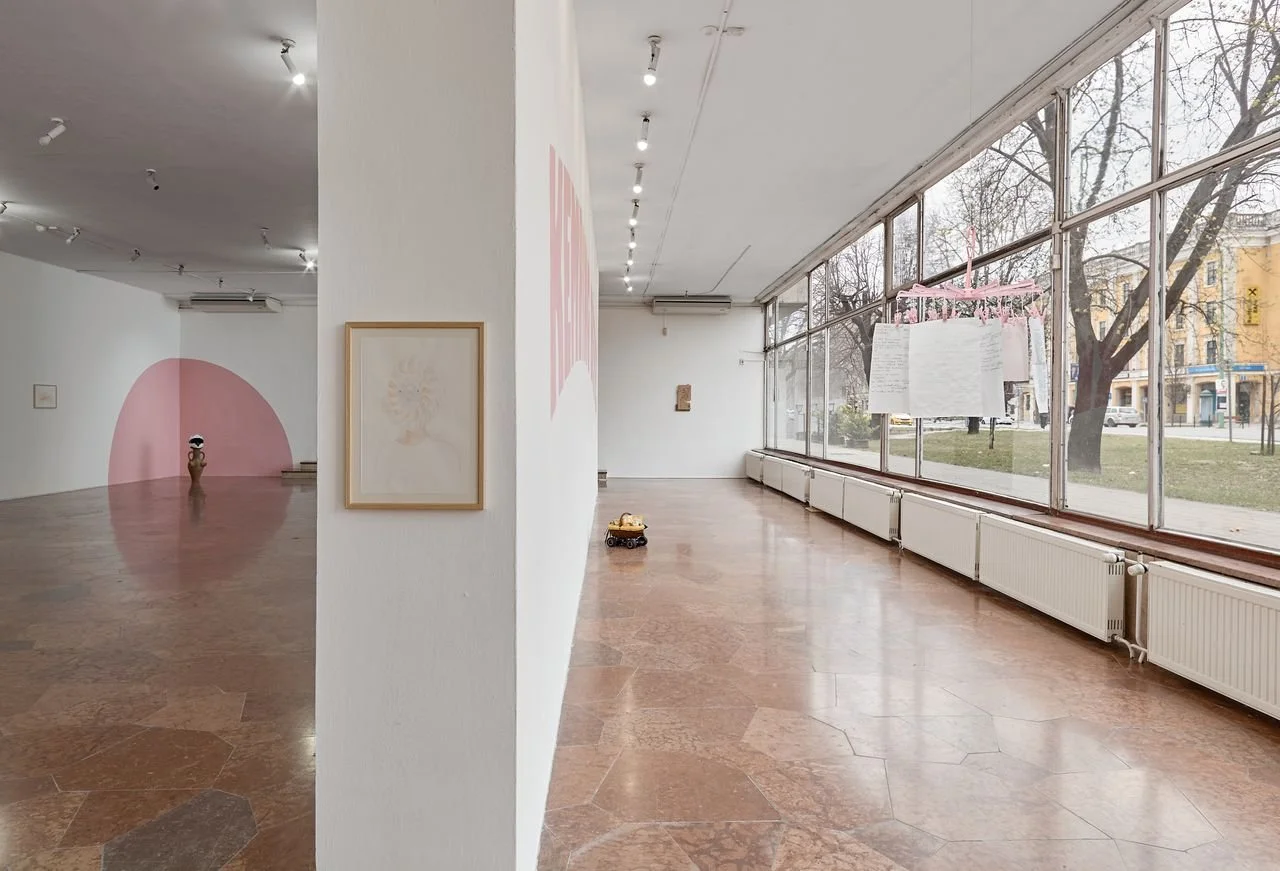
Entering the bright spaces of the exhibition The Ways of Being at the Institute of Contemporary Art, Dunaújváros; the present unfolds before us in the form of subjective archaeological remains. The works of Lőrincz and El-Hassan are, without exception, found objects that emerge from unconscious layers and personal experiences. Assuming the role of tireless archaeologists, the artists engage in a Sisyphean task, continuously organizing the experience of mere existence into drawings, sculptures, and installations.
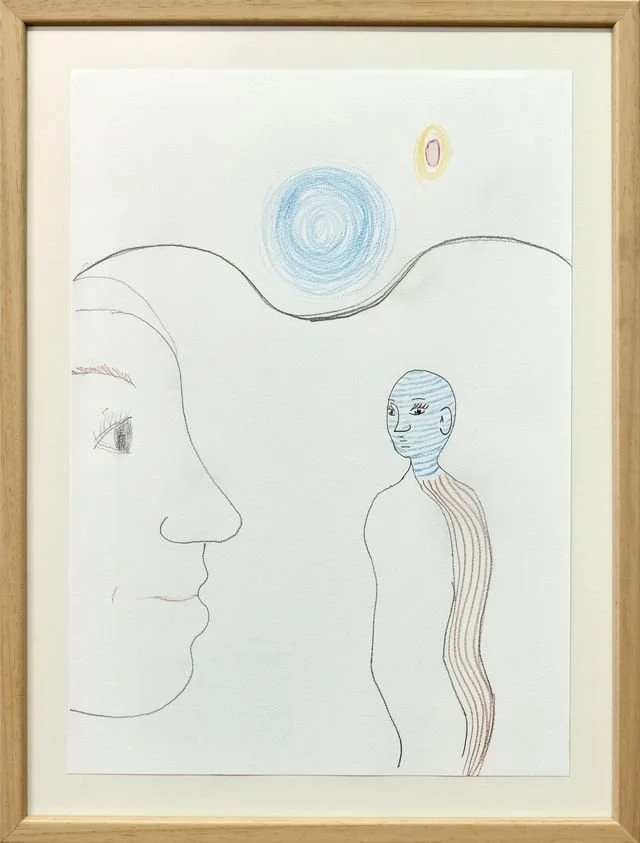
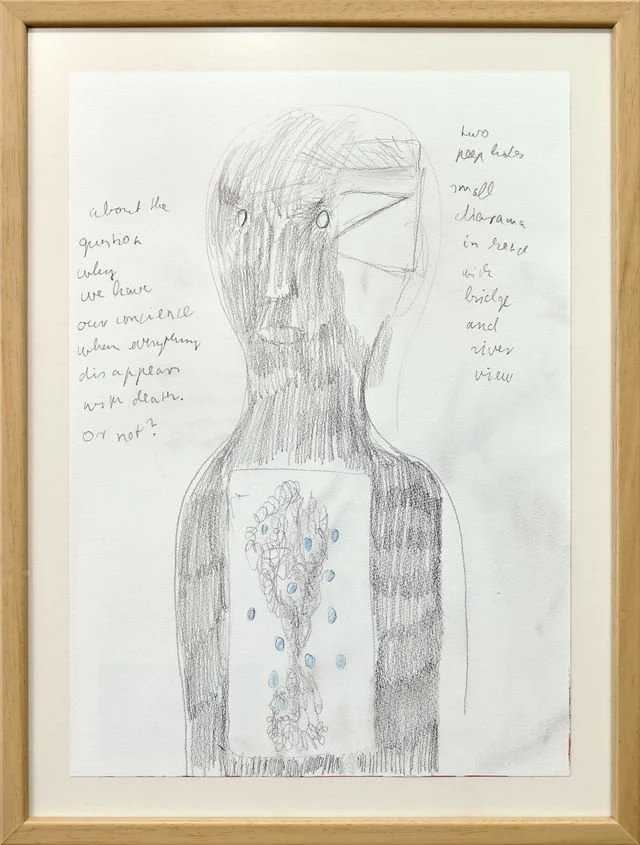
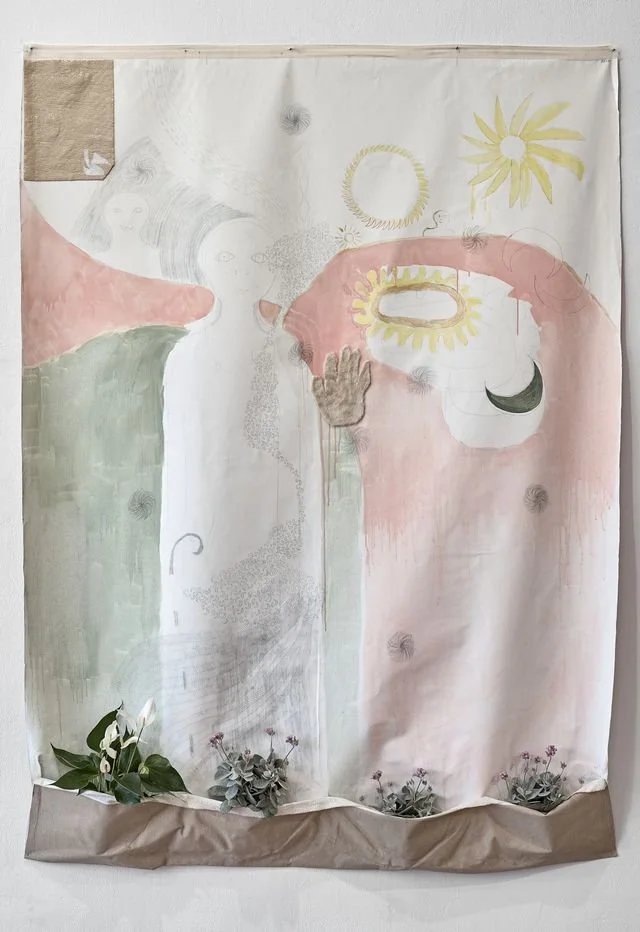
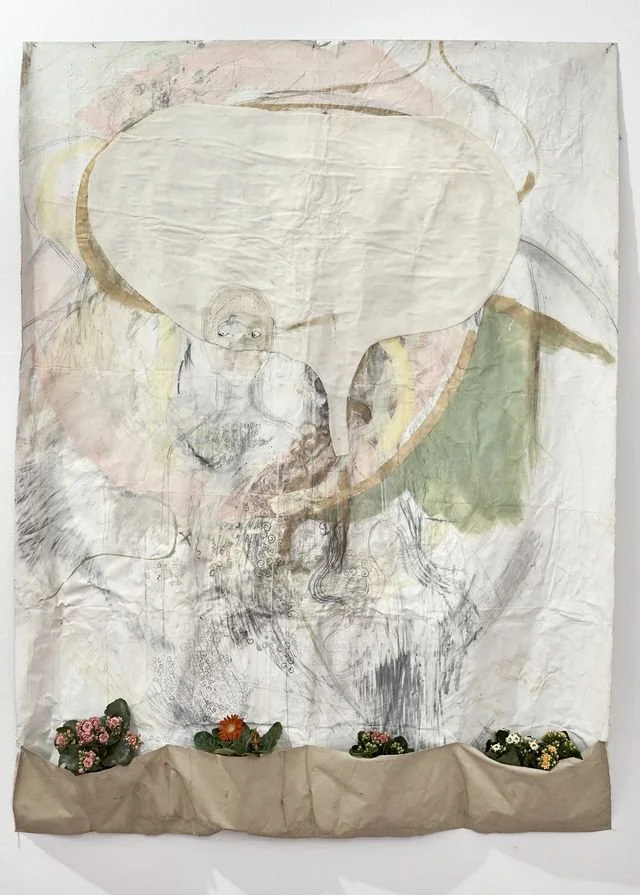
The 2026 pencil drawings of the Syrian Hungarian artist Róza El-Hassan reflect on recent the months, including her collaborative process and friendship with Réka Lőrincz. Her characteristic enigmatic anthropomorphic figures now radiate a gentle serenity and timeless calm. The most complex work in the series is the graphite sketch titled Facing, which carries within it the promise of a yet unrealized sculpture. On the left side of the figure resembling a biological cross-section, a handwritten note by the artist contemplates the eternal question of life after death: Does consciousness vanish with the body into oblivion? Though the existential crisis remains unresolved in text, the idyllic landscape intended for the sculpture’s cranial cavity offers a sense of hope. Its deliberate incompleteness implicitly emphasizes the possibility of change.
A similar spiritual quality appears in Lőrincz’s Healing drawings, where swirling yellow and pink waves not only record but also actively improve the artist’s emotional state. In her practice, Réka Lőrincz works with internal energies, helping others on a daily basis. Her artistic and healing practices are nearly inseparable. Described as energetic scores, her works function as notes, map-like documents that are both tools and results of her acts of care.
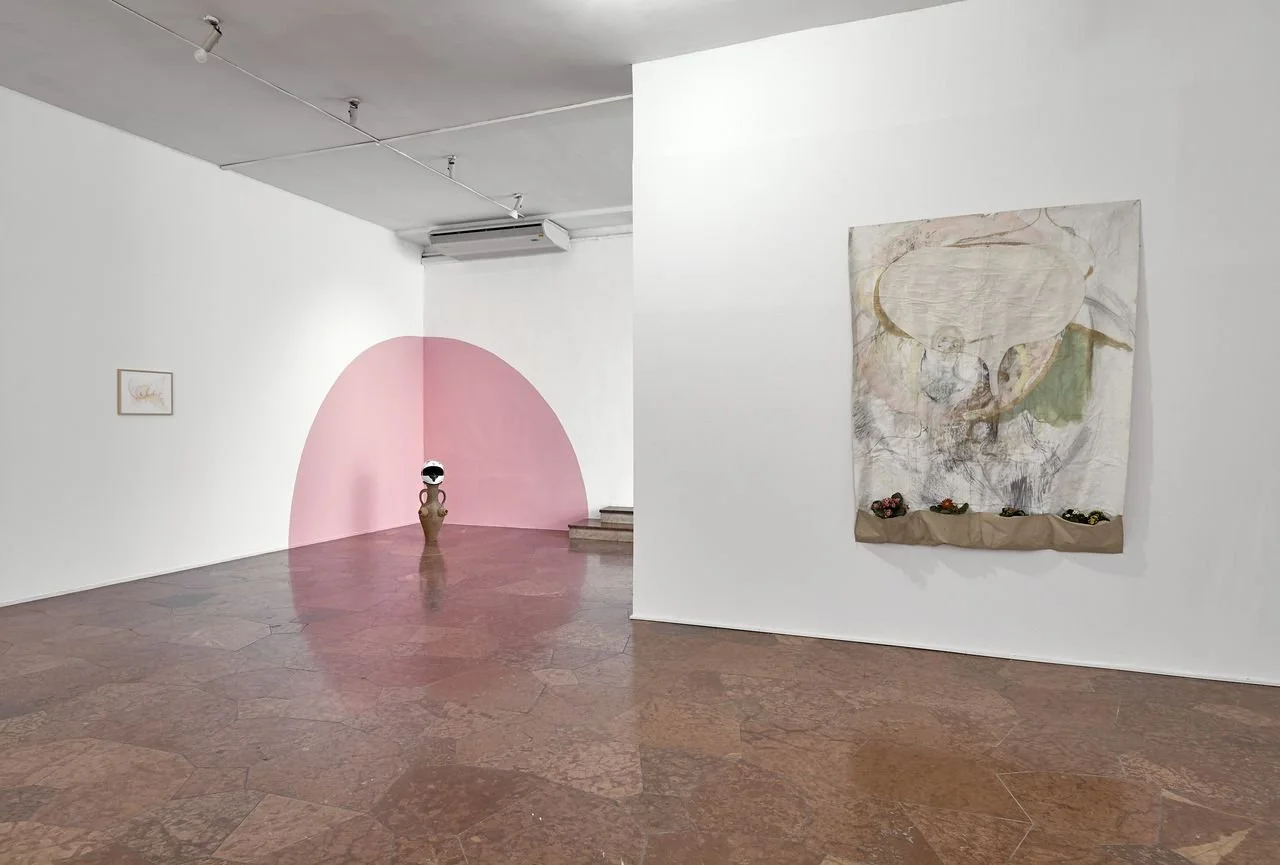
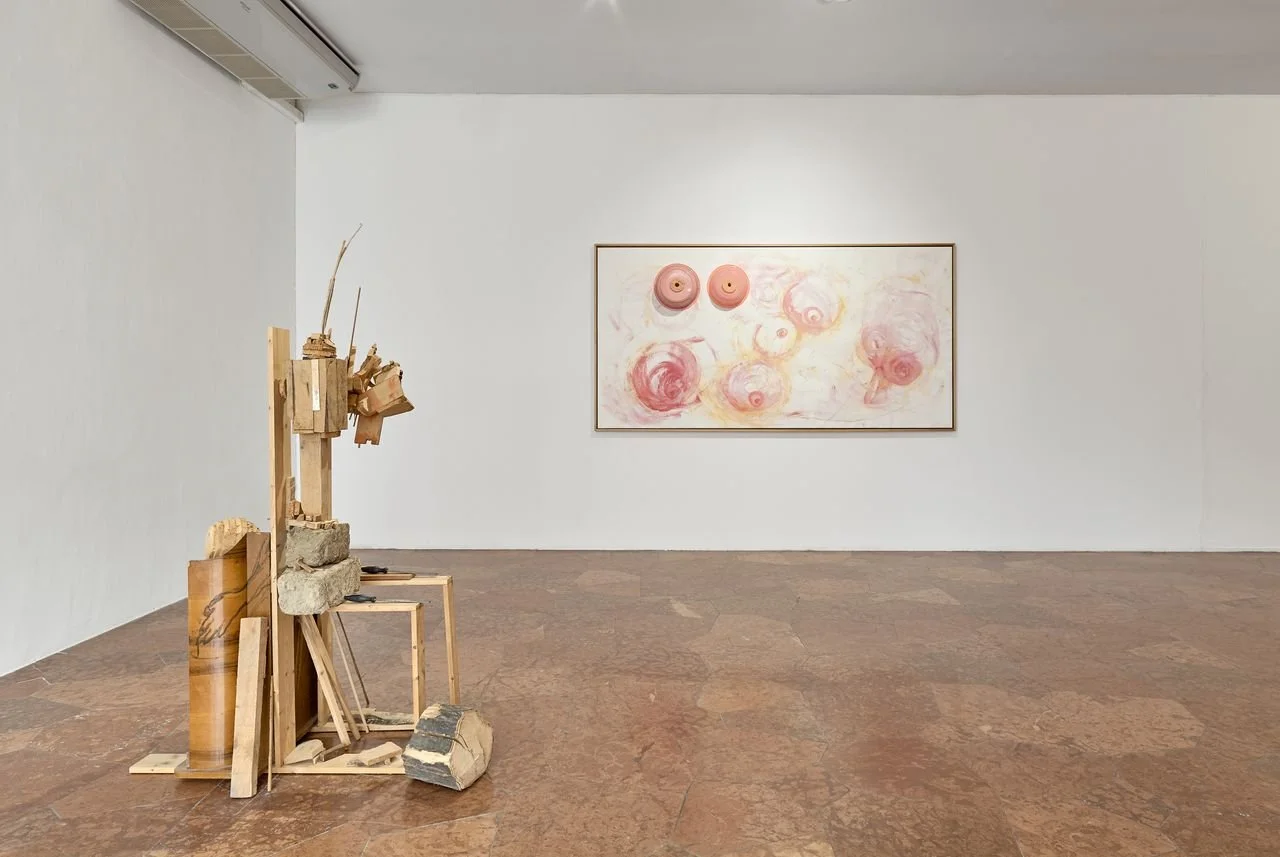
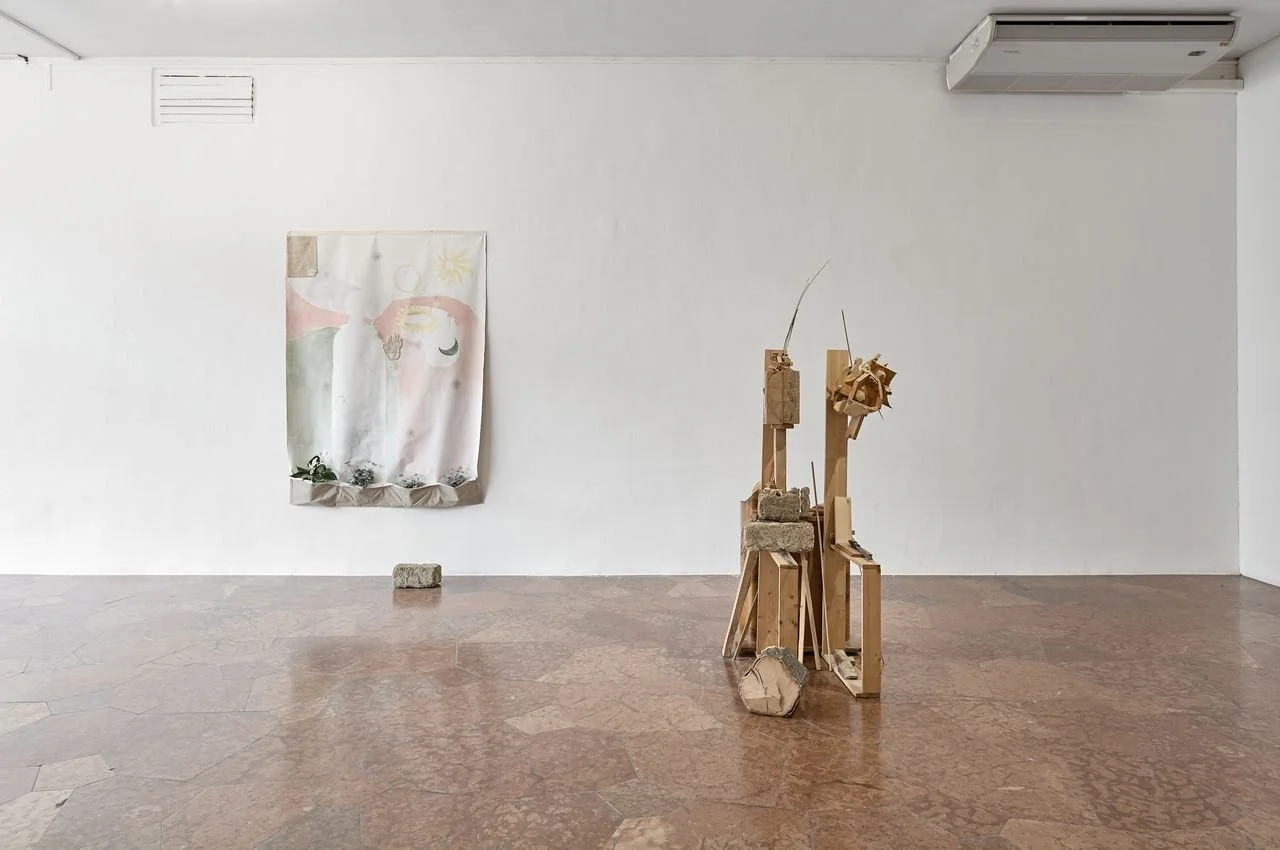
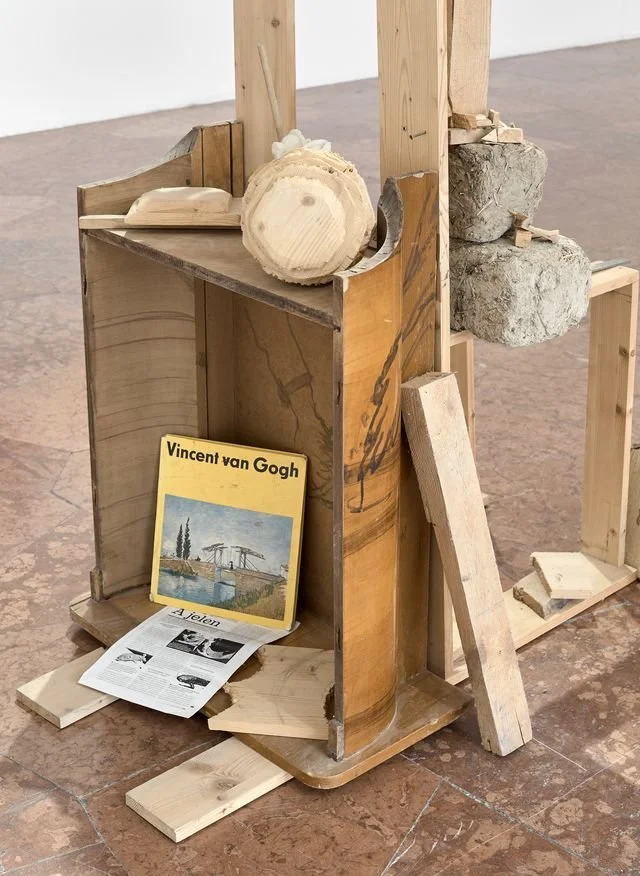
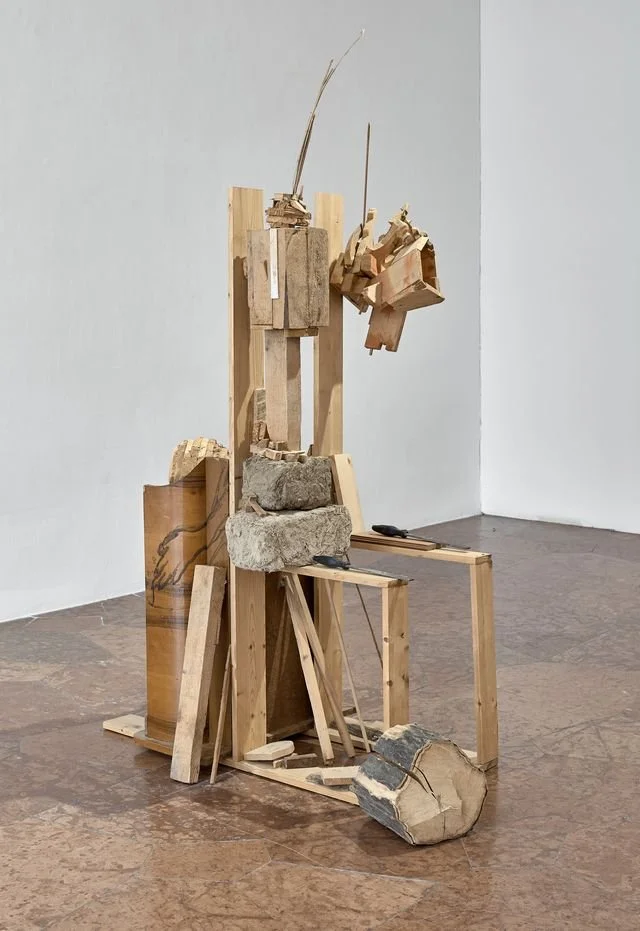
Their worldview is also evident in their artistic techniques and materials. The exhibition’s curator, Sonja Teszler, emphasizes the dadaist and surrealist tendencies in their work, particularly the parallels between their automatic gestures and those of Central and Eastern European women surrealists of the 1930s and 40s, such as Toyen and Unica Zürn. At the same time, their commitment to eco aesthetics and environmental awareness is equally significant. Both artists reject industrial production and the logic of the art market. They create assemblages from sustainable materials and found objects using manual methods. Since 1999, El-Hassan has produced her sculptural ensembles from wood and found materials using hand tools. The exhibition features more recent works, including the monumental piece titled Couple, created between 2020 and 2026, which represents the desire for both individual and collective liberation. The cubist multi perspective sculpture of a male female pair incorporates found and reused objects from adobe bricks, leftover from her exhibition Breeze, to Eastern fertility figures collected during her travels and even the tools used in the sculpture’s creation, further emphasizing the processual nature of art.
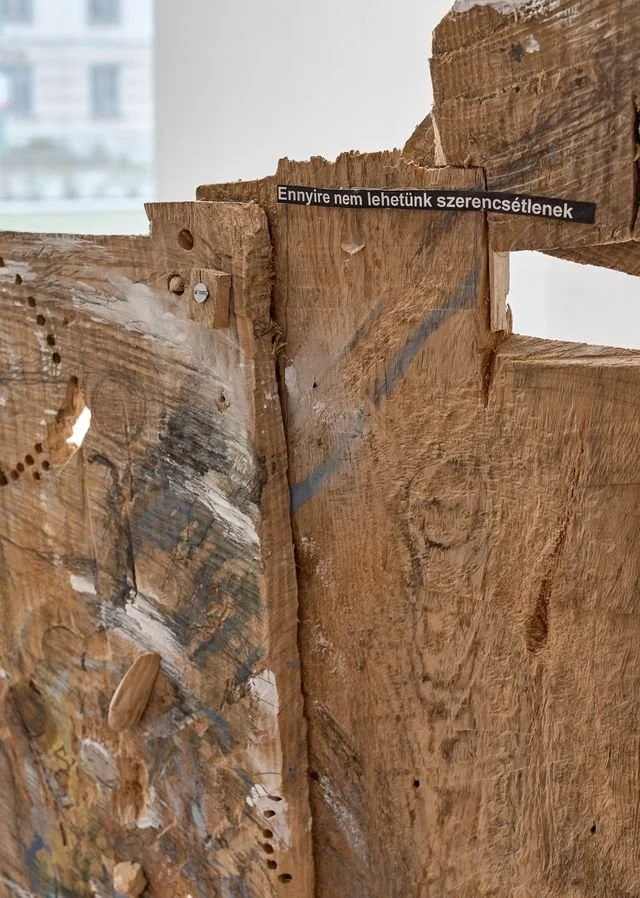
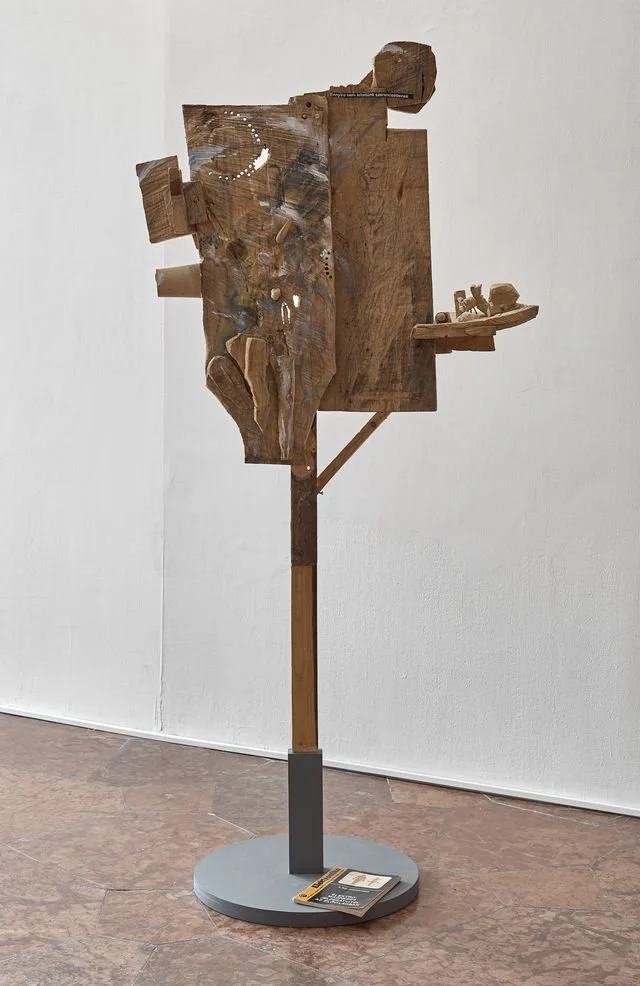
Among the interactions within the exhibition, a particularly striking example is an ammonite found by Réka Lőrincz, to which El-Hassan responded with the energetic portrait titled Shell Face, depicting the fossilized remains of the ancient organism. This work connects to artists ongoing research about electromagnetic communication between living beings. Just as the wooden Protest Sign subtly calls viewers to action: Let us stop the destruction of nature driven by market interests, because if we do not act, the vibrational waves connecting all living things may soon fall silent forever. Opposite this piece, Lőrincz’s works Practical Peace and Camping Peace share affinities with El-Hassan’s demonstrative object. The former, a jug-bodied and helmet-headed anthropomorphic installation, can be interpreted as a fertility idol or a totemic goddess of spiritual peace, while the latter video work shows Lőrincz sitting in her garden, smoking a daisy, resisting the productivity driven logic of society. The footage, accompanied by birdsong, fills the exhibition space with a refreshing sense of springtime optimism.
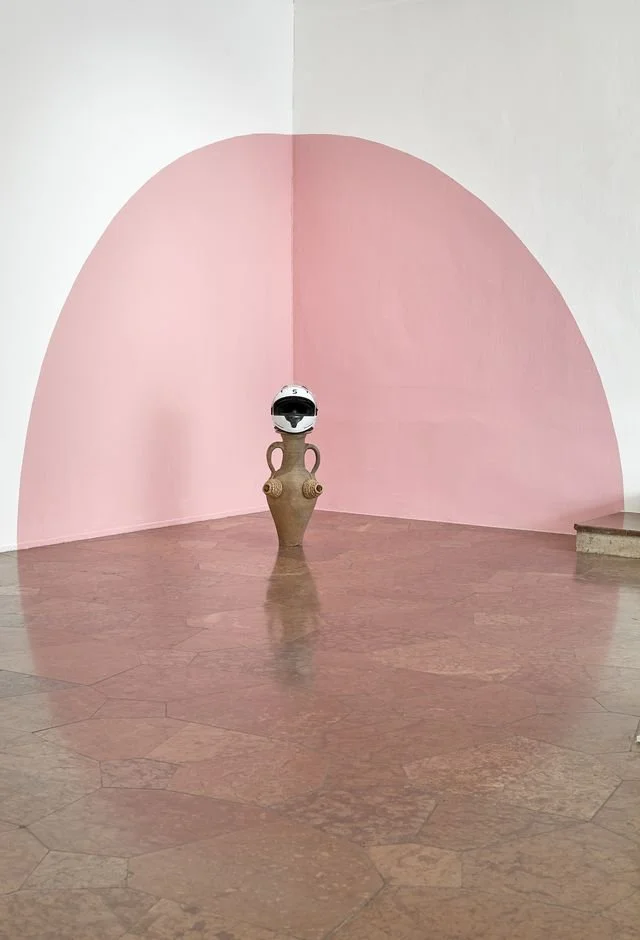
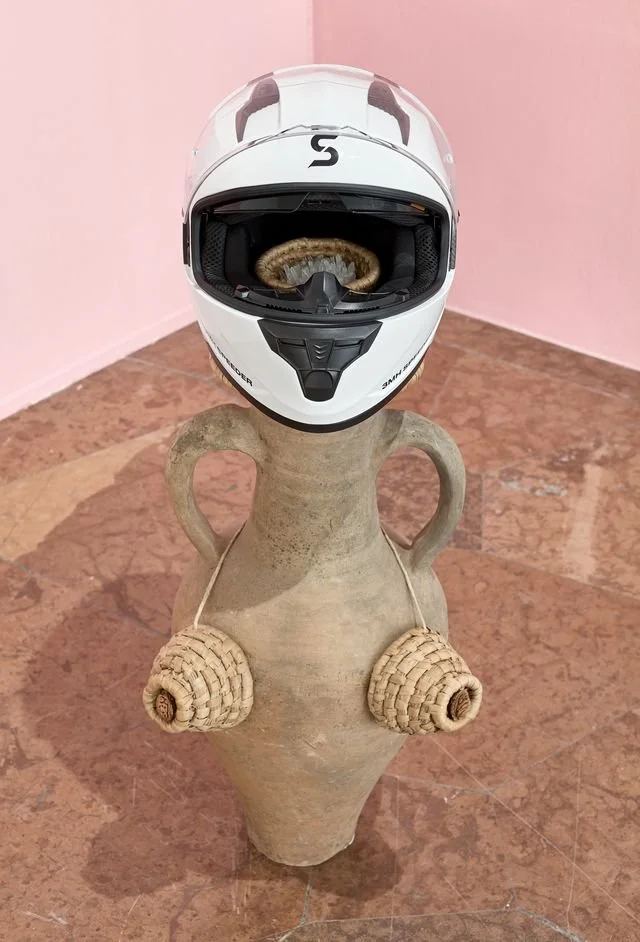
Among the interactions within the exhibition, a particularly striking example is an ammonite found by Réka Lőrincz, to which El-Hassan responded with the energetic portrait titled Shell Face, depicting the fossilized remains of the ancient organism. This work connects to artists ongoing research about electromagnetic communication between living beings. Just as the wooden Protest Sign subtly calls viewers to action: Let us stop the destruction of nature driven by market interests, because if we do not act, the vibrational waves connecting all living things may soon fall silent forever. Opposite this piece, Lőrincz’s works Practical Peace and Camping Peace share affinities with El-Hassan’s demonstrative object. The former, a jug-bodied and helmet-headed anthropomorphic installation, can be interpreted as a fertility idol or a totemic goddess of spiritual peace, while the latter video work shows Lőrincz sitting in her garden, smoking a daisy, resisting the productivity driven logic of society. The footage, accompanied by birdsong, fills the exhibition space with a refreshing sense of springtime optimism.
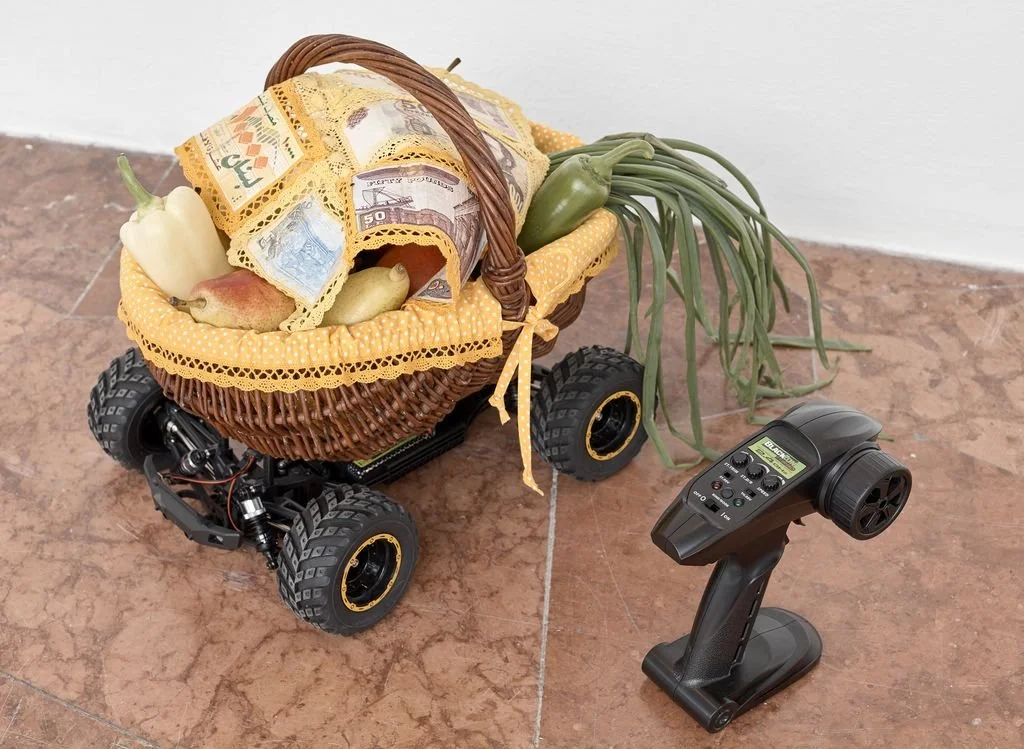
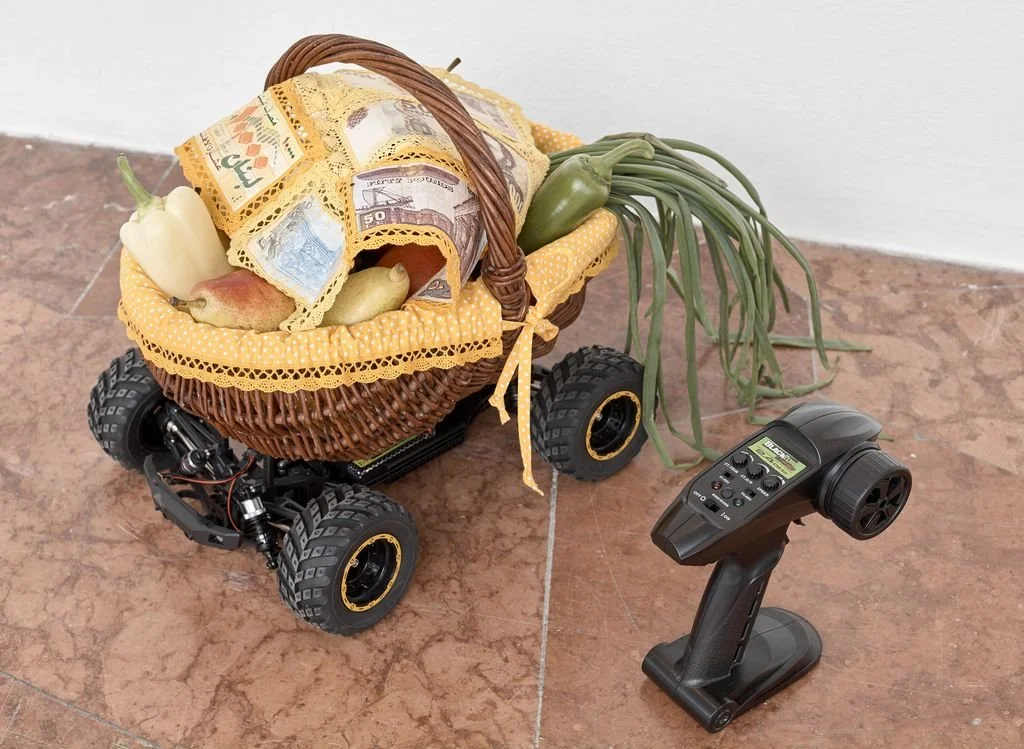
his spirit continues in Lőrincz’s kinetic installation titled Abundance on Four Wheels, which conveys a positive worldview while uniting her concept of art as contribution. The work consists of a remote-controlled toy car loaded with fresh fruits and banknotes from around the world, that both the artist and visitors can freely guide throughout the exhibition. With light humor, the gesture recalls the ancient symbol of the cornucopia, associated with prosperity, fertility, and Fortuna, the goddess of luck. The key lies in its mobility, the abundance it represents is not fixed nor reserved for an individual or select group, but belongs to society as a whole.
The most defining feature of the artistic attitude of Réka Lőrincz and Róza El-Hassan is their rejection, much like Ursula K. Le Guin, of the loneliness fetish inherent in individualistic societies. This is reflected in the large “KEMPING BÉKE” (CAMPING PEACE) inscription painted on the gallery’s street facing wall, which acts as the exhibition’s slogan, uniting their shared ethos of nonviolence and spontaneous artistic practice. While peace in everyday life can be achieved individually, it only becomes meaningful and transformative when shared with others. The two artists thus offer their personal experiments in peace as invitations to mutual solidarity.
Their art, to borrow Le Guin’s analogy, becomes like a woven basket holding fragments of lived experience that together contain the phenomenological reality of the universe. Such a practice focuses on the present moment, yet remains inherently continuous and future oriented. Instead of grand masterpieces, it records small gestures. El-Hassan draws daily, persistently addressing the urgent issues of war and environmental catastrophe, while Lőrincz continually heals and supports others through her expression. As curator Sonja Teszler notes, the works in The Ways of Being offer alternative modes of communal existence through the externalization of internal processes. This raises a final question: What kind of future is worth enduring the harsh realities of our present for? Through their intuitive works, El-Hassan and Lőrincz offer an answer, momentarily lifting the veil of rational perception to reveal a future shimmering with sunlit peace.
Title: Ways of Being
Artists: Réka Lőrincz, Róza El-Hassan
Curator: Sonja Teszler
Venue: ICA, Dunaújváros
Dates: March 21 to April 30, 2026